• 2 min read
Starship V3 abort hits SpaceX stock and Starlink plans
SpaceX scrubbed Starship V3 after several Raptor engines failed to ignite. The delay rattled shares and puts new pressure on Starlink expansion.
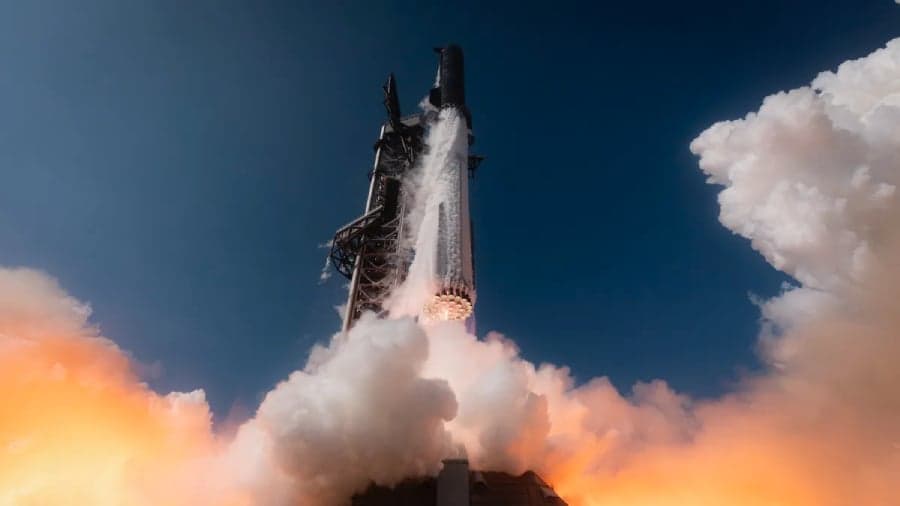
Image: TechRepublic
SpaceX’s Starship V3 was pulled from the pad at the last minute on Thursday after an engine problem triggered an automatic abort. According to Elon Musk, “some of the engines didn’t start,” stopping what would have been only the second launch of Starship V3 and the company’s first launch since becoming a public company.
“Some of the engines didn’t start, triggering an automatic launch abort.”
Musk said two Raptor engines will be removed and replaced to improve the odds of a successful flight. He added that the “most probable launch timing is early next week.” The previous Starship V3 attempt in May led to a two-month pause in testing while SpaceX and the Federal Aviation Administration investigated a booster failure.
The aborted mission carried added financial weight. News of the delay pushed SpaceX stock down 4%, extending a slide that began shortly after the company’s market debut. Even after that drop, SpaceX remained among the 10 most valuable companies in the world by market cap at $1.65 trillion, though the company has lost more than $1 trillion in value over the past week. TechRepublic notes that SpaceX generates far less revenue than the other companies in that group and is not profitable.
The test flight was set to carry 20 third-generation Starlink satellites, which were expected to return to Earth after orbital testing. SpaceX has asked the Federal Communications Commission for permission to launch 100,000 of these satellites, a major expansion aimed at broadening Starlink availability. The company’s IPO prospectus positioned Starlink as a key part of its short- to medium-term revenue plan, and TechRepublic says SpaceX has also reportedly considered a consumer cellular service to compete with AT&T and Verizon.

Recommended reading
One motor powers this robotic hand’s multiple grippers
That makes Starship central not just to SpaceX’s Moon and Mars ambitions, but to its near-term business case. Other launch companies are also under pressure: Blue Origin has pushed New Glenn to at least the fourth quarter of this year after an explosion damaged part of its launchpad, while Firefly Aerospace and Rocket Lab have also faced setbacks this year. If Starship slips further, the expansion of Starlink — and any future satellite broadband or cellular offering tied to it — could slip with it.

Frontier Editor
Dan is our resident futurist, covering electric mobility, space exploration, and the smart home. He's interested in atoms just as much as bits. Whether it's a new battery chemistry, a reusable rocket, or a protocol that finally makes IoT devices talk to each other, Dan breaks down the engineering that pushes humanity forward.
via TechRepublic