• 2 min read
Sun 'switch-off' point may forecast solar storms years early
Astronomers say a sudden solar 'switch-off' could predict the next solar cycle about six or seven years before its peak.
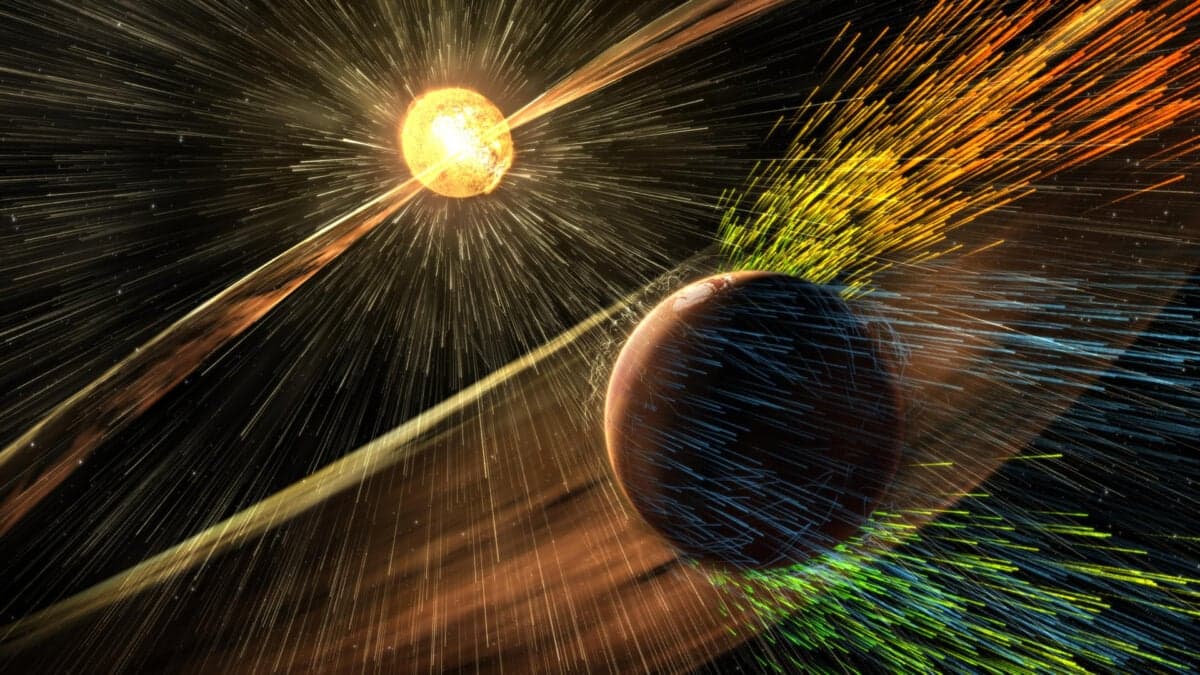
Image: Gizmodo
Astronomers may have found a new way to predict the Sun’s next activity cycle six or seven years before it reaches maximum intensity. The method centers on a “switch-off” point in each solar cycle, when the Sun’s most extreme space weather events stop abruptly rather than fading gradually.
The research, led by Sandra Chapman of the University of Warwick in the U.K., will be presented at the Royal Astronomical Society’s National Astronomy Meeting this week. Chapman said the finding could make solar forecasting far less uncertain.
“The Sun doesn’t gently go to sleep and then gently wake up again. Instead, we’ve discovered that the most extreme space weather switches off quite suddenly at a specific point in every solar cycle. By identifying that point, we’ve found a new way to predict how active the next solar cycle is likely to be.”
How the solar “switch-off” works
The Sun’s magnetic field flips polarity roughly every 11 years, swapping its north and south poles. Between those reversals, concentrations of magnetic field lines create sunspots—dark patches on the Sun’s surface that are closely tied to solar flares and coronal mass ejections.
Those cycles are irregular in both length and strength, which has made forecasting difficult. Chapman and colleagues previously proposed a “sun clock” in 2020, mapping the Sun’s uneven activity onto a standard clock. That work revealed a repeating pattern: in every cycle, the most severe space weather appears to shut off at a distinct point.
Recommended reading
Too Much Power Could Make Electricity Prices Go Negative
What the model could change
The team’s latest work links the number of sunspots at the switch-off point to the peak number of sunspots in the following solar cycle. From that correlation, the researchers built a forecasting method aimed at predicting the strength of the next cycle well in advance, while also tracking changes in the solar dynamo, the process that generates the Sun’s magnetic field.
According to the statement, early tests showed the model successfully predicted the unusual strength of Solar Cycle 25, something many earlier forecasts missed. Right now, forecasters generally have to wait until solar minimum to estimate what comes next.
Chapman said the team plans to keep tracking Cycle 25 to improve the model with real-world observations.
“We’re about two years away from the switch-off point for the current Solar Cycle 25. At the moment, we have to estimate where that point will be, but once we reach it, we can use observations alone to make a much more precise prediction for Solar Cycle 26. That will still give us around seven years' warning of how strong the cycle is likely to be.”

Frontier Editor
Dan is our resident futurist, covering electric mobility, space exploration, and the smart home. He's interested in atoms just as much as bits. Whether it's a new battery chemistry, a reusable rocket, or a protocol that finally makes IoT devices talk to each other, Dan breaks down the engineering that pushes humanity forward.
via Gizmodo