• 2 min read
AI lab finds six 3D-printable alloys for extreme heat
University of Toronto engineers used a self-driving lab to discover six printable Ni-Co-Cr alloys that beat Inconel 625 in high-temperature tests.
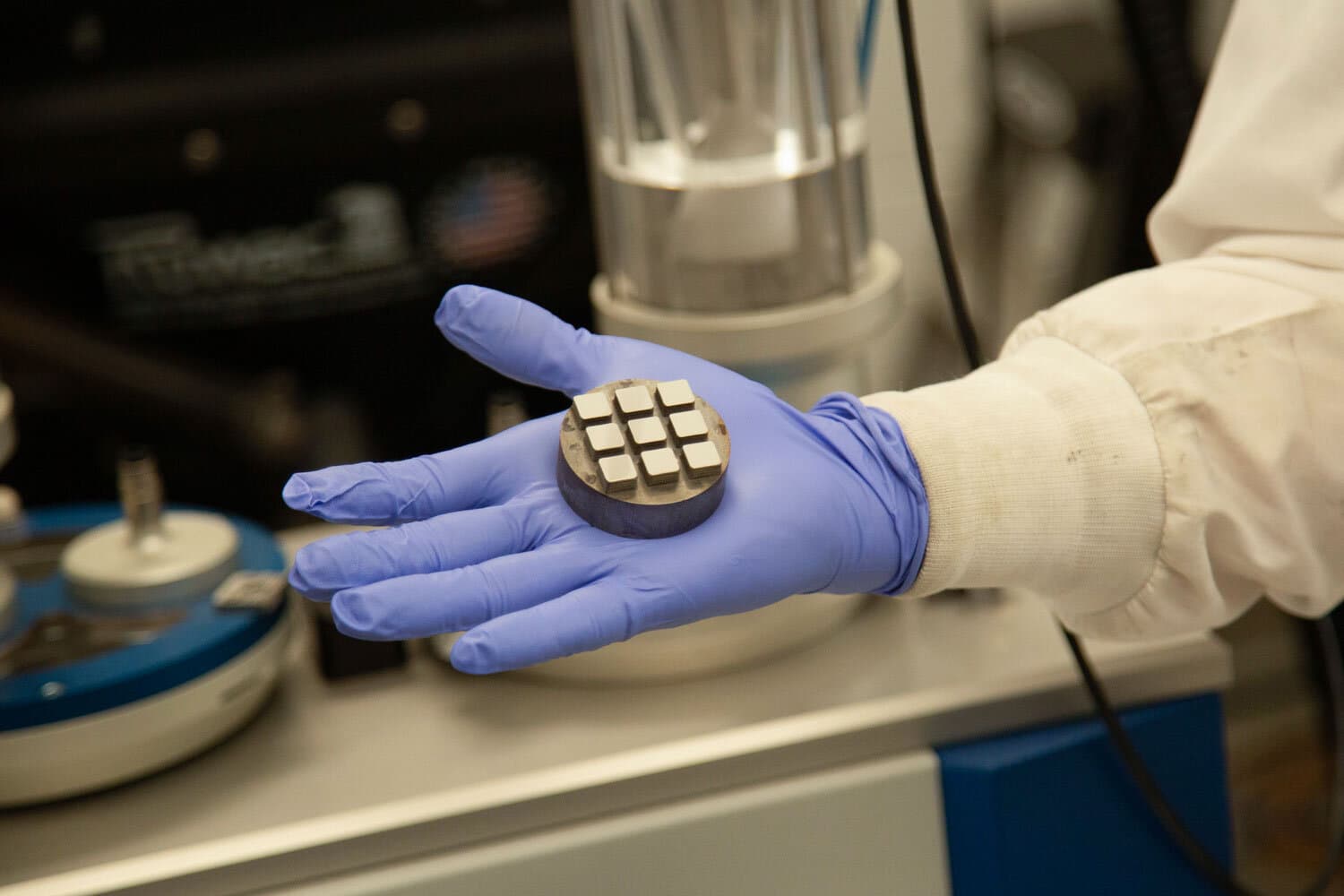
Image: TechXplore
A self-driving lab at the University of Toronto Engineering has identified six new 3D-printable metal alloys built to hold up under extreme heat, a result that could help produce custom parts for aerospace, power generation, and other demanding applications.
The team used AI-driven materials design to search for alloys that can survive the kinds of temperature and pressure swings found inside jet engines and steam generators in nuclear power plants, where, as project lead Yu Zou put it, conventional steel cannot last. Zou, the Canada Research Chair in Materials and Manufacturing for Extreme Environments, said the goal is not just stronger materials but alloys suited to additive manufacturing, which makes it possible to build parts that traditional methods cannot.
Many high-performance alloys now in use rely mostly on a single base metal, often nickel or cobalt, mixed with small amounts of up to 10 other elements. But exploring the much larger design space of alloys with three or more principal elements is difficult. To tackle that, Zou’s group worked with Jason Hattrick-Simpers on an active learning system that combines computer modeling, machine learning, and robot-assisted manufacturing in a closed loop.
According to Ajay Talbot, a Ph.D. student in Zou’s lab and lead author of the npj Advanced Manufacturing paper, the approach is designed for areas where little prior data exists. Instead of requiring huge training datasets, the system picks a small number of samples to fabricate and test, then feeds those results back into the model to guide the next round.

Recommended reading
Samsung 990 SSD hits 7,250 MB/s with a 2TB option
In just a few weeks, the lab focused on compositionally complex alloys made from nickel, cobalt, and chromium and found six promising candidates. One alloy, made of 12% nickel, 62% cobalt and 26% chrome, was aimed at retaining hardness at up to 600°C (1,112°F), roughly the conditions in the front section of a jet engine. In the team’s lab tests, Talbot said it outperformed Inconel 625 by 4.5%.
Another alloy, containing 36% nickel, 14% cobalt and 50% chrome, was designed for temperatures up to 1,000°C (1,832°F), where oxidation becomes a major problem. Talbot said it beat Inconel 625 in oxidation resistance by 85%. The team said it is ultimately aiming to push toward 1,200°C (2,192°F).
The work is partially supported by the University of Toronto’s Acceleration Consortium. The paper is titled “Active learning for the accelerated discovery of complex concentrated NiCoCr alloys in additive manufacturing” and carries the DOI 10.1038/s44334-026-00098-5.

Computing Editor
Tomas lives in the terminal. He covers chips, laptops, and operating systems with a focus on performance and efficiency. He reads kernel changelogs the way other people read fiction, and he's always on the hunt for the perfect mechanical keyboard switch. If it processes data, Tomas has an opinion on it.
via TechXplore