• 2 min read
Brain Study Shows How Humans Tackle New Problems
A Nature study with more than 1,000 participants found people test a few likely moves, not every option, when facing unfamiliar tasks.
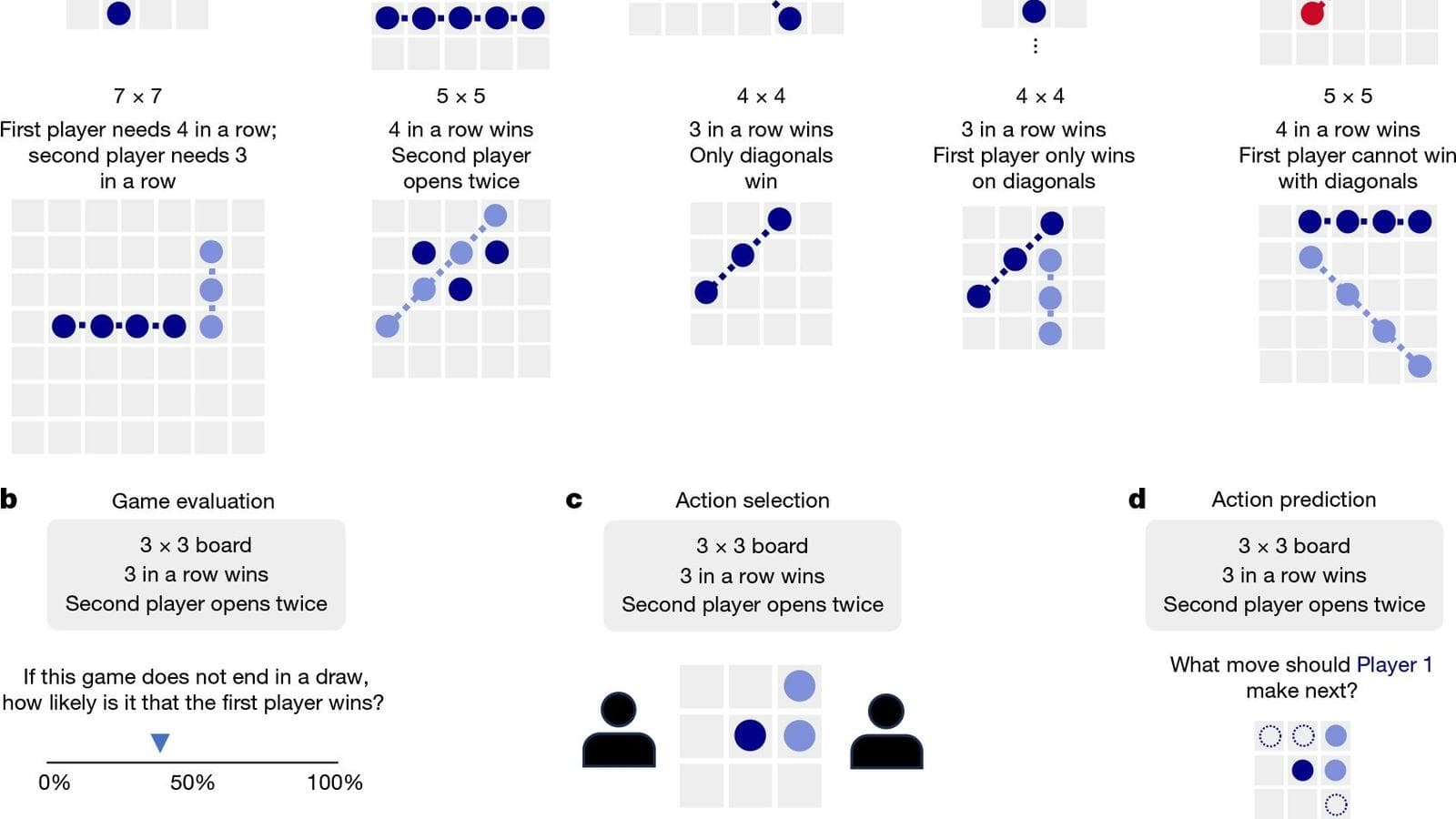
Image: iXBT
Humans facing a completely unfamiliar problem do not try to calculate every possible outcome. According to a Nature study published on July 19, 2026, they instead build a quick mental model of a small number of possible moves and use that to make a good enough decision — a pattern that could help researchers design more efficient AI systems.
The team created 121 new strategic games to study how people reason under rules they had never seen before. The digital board games resembled tic-tac-toe in structure, but varied in board size, rules, and win conditions. In some versions, making a line meant victory; in others, it meant defeat.
More than 1,000 participants were split into several groups. One group saw an empty board and the rules, then rated whether the game seemed fair and interesting without making any moves. A second group actually played the unfamiliar games. A third watched those first-time players and tried to predict their next moves.

Recommended reading
NASA puts Starlink Mini on Orion for Artemis III
Most earlier work in this area focused either on how experienced players improve at known games or on how computers brute-force huge numbers of possibilities. This study looked at a different question: how people think inside a new rule system.
To explain that behavior, the researchers built a computer model called Intuitive Gamer. The model mimics human-style decision-making by checking only a few candidate moves and evaluating just the near-term result — for example, getting closer to a win or blocking an opponent.
When the researchers compared the model’s choices with participant behavior, they found strong similarities. The paper argues that in unknown situations, people use a systematic, adaptive process: not random guessing, but also not exhaustive search, which would demand too much time and computation.
The authors say the Intuitive Gamer approach could be useful for building AI models that make sensible decisions in new situations while using far fewer computational resources than systems designed to analyze every possible branch.

Frontier Editor
Dan is our resident futurist, covering electric mobility, space exploration, and the smart home. He's interested in atoms just as much as bits. Whether it's a new battery chemistry, a reusable rocket, or a protocol that finally makes IoT devices talk to each other, Dan breaks down the engineering that pushes humanity forward.
via iXBT