• 3 min read
China’s 2 GW floating offshore converter station is complete
China has completed a floating offshore converter station that is unusual even by the country’s standards: a 2 GW platform designed to connect two large wind farms to the national grid. The project, called "Haifeng Heart
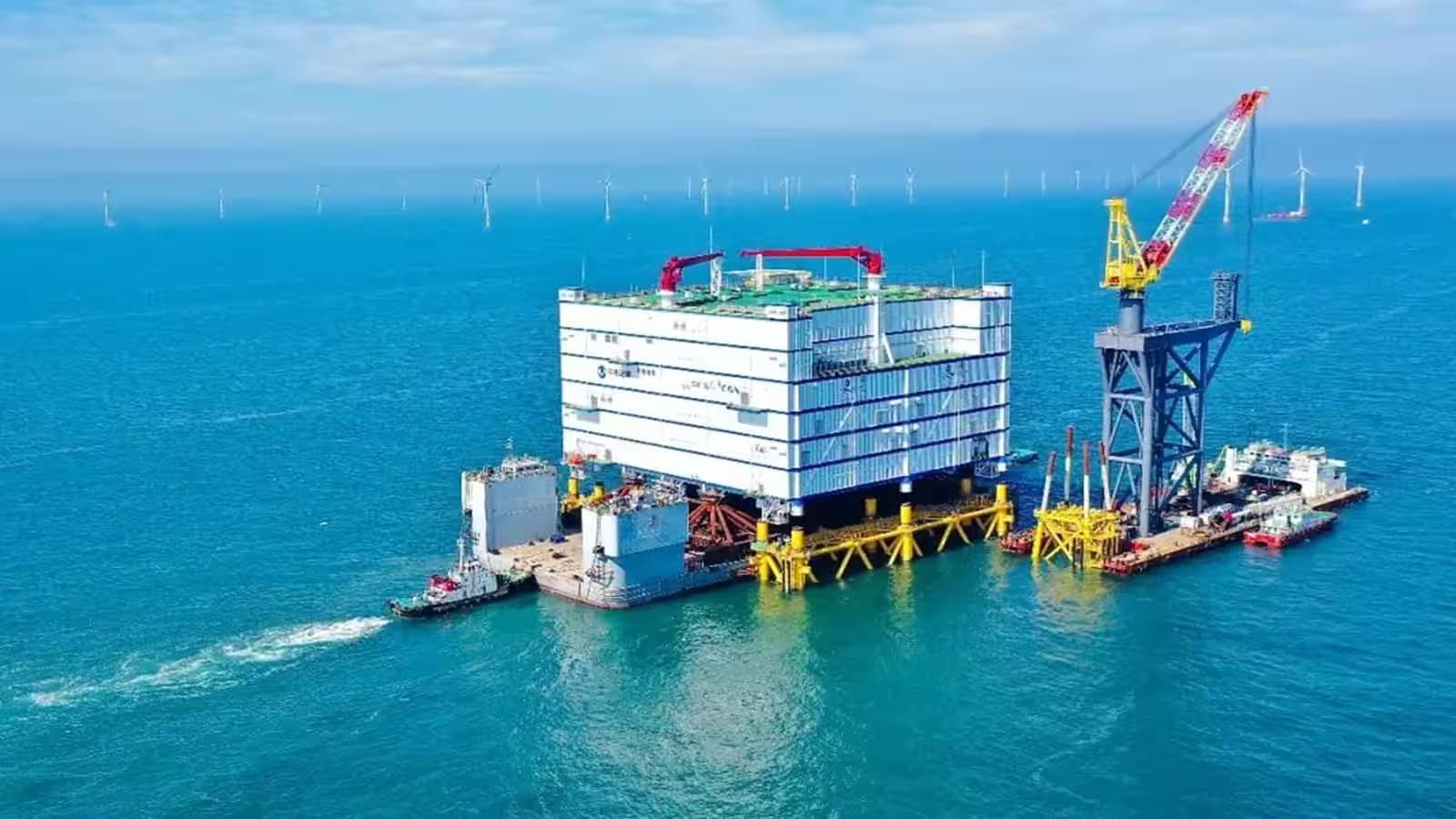
Image: ixbt.com
China has completed a floating offshore converter station that is unusual even by the country’s standards: a 2 GW platform designed to connect two large wind farms to the national grid. The project, called “Haifeng Heart,” has already been shipped toward the coastal waters of Yangjiang, where the final installation phase will begin.
At a time when offshore wind developers are pushing farther from shore, the engineering choice is obvious. Moving electricity over long submarine cables as alternating current wastes too much power, so the industry keeps leaning on high-voltage direct current systems to cut losses and unlock deeper waters. China is simply doing it at a bigger scale, and earlier than many rivals.
A 2 GW platform for two wind farms
The floating offshore converter station will serve the “Three Gorges Yangjiang Qingzhou V” and “Qingzhou VII” offshore wind projects. Once operating, it is expected to send about 6 billion kilowatt-hours of renewable electricity into the grid each year, turning a single offshore hub into a major piece of power infrastructure rather than just another support platform.
Shanghai Zhenhua Heavy Industries, better known as ZPMC, designed and built the system. The platform measures 44 meters high, 85.5 meters long, and 82.5 meters wide, with a mass of 25,000 tons – numbers that explain why this was treated more like heavy industrial assembly than conventional shipbuilding.
Recommended reading
Magnesium oxide could shield fragile solid-state batteries
Six records in one project
ZPMC says the project set six industry records, including the largest single-unit transmission capacity at 2,000 MW, the highest-voltage flexible direct-current transmission system for offshore wind, and the first integrated use of AC and DC transmission in one offshore wind project. It also introduced 525 kV submarine DC cables for ultra-long-distance green power transport.
- Transmission capacity: 2,000 MW
- Connected wind farms: two projects with combined installed capacity of 2 GW
- Platform size: 44 meters high, 85.5 meters long, 82.5 meters wide
- Mass: 25,000 tons
- Submarine cable voltage: 525 kV
Why the industry keeps chasing DC
The logic behind the hardware is simple. Offshore turbines generate alternating current, but long-distance undersea transmission makes AC increasingly inefficient, so converter stations like this one become the bridge between remote wind resources and mainland demand. The advantage is not subtle: less wasted energy, larger project footprints, and access to wind zones more than 100 kilometers from shore.
That is also why this kind of project matters beyond one Chinese coastline. Europe’s offshore wind market has been wrestling with grid bottlenecks and delayed connections for years, while China has been scaling both turbines and transmission gear in parallel. The result is a platform that is not just large, but strategically timed for the next phase of offshore expansion.
The assembly trick behind the giant
ZPMC said it used an integrated build method: assembly onshore, transport as a single block, and installation by skidding into place. That approach sounds almost quaint until you remember the size of the thing. For a structure this complex, the real challenge is not simply building it, but keeping the supply chain, internal equipment installation, and final move from collapsing under their own weight.
The floating offshore converter station is now headed for its offshore destination, and the interesting question is whether this becomes a template. If China can keep turning 2 GW converter stations into repeatable infrastructure, offshore wind in deeper water stops being a technical edge case and starts looking like the default.

Frontier Editor
Dan is our resident futurist, covering electric mobility, space exploration, and the smart home. He's interested in atoms just as much as bits. Whether it's a new battery chemistry, a reusable rocket, or a protocol that finally makes IoT devices talk to each other, Dan breaks down the engineering that pushes humanity forward.
via ixbt.com