• 2 min read
Cortex launches DRIVE to track AI-era engineering health
Cortex has introduced DRIVE, a five-part framework for measuring whether engineering teams can ship software quickly and sustainably as AI accelerates output.
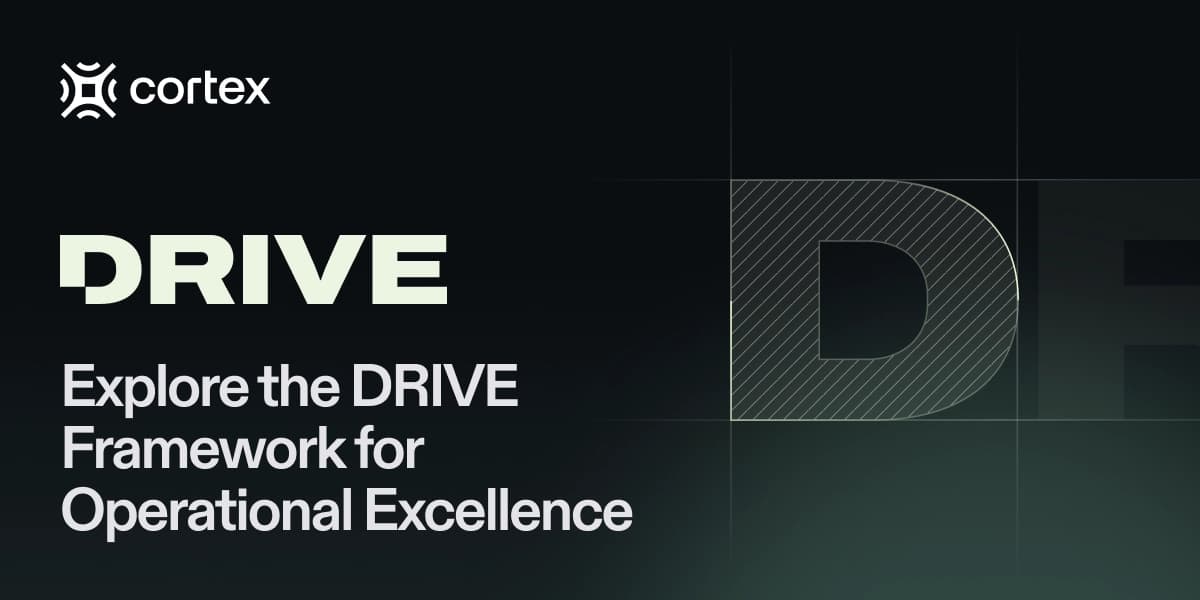
Image: Hacker News
Cortex has introduced DRIVE, a framework aimed at measuring engineering organizational health as AI speeds up software development. The company says DRIVE focuses on whether an organization can sustainably turn customer needs into reliable software, not just whether individual developers or teams are productive.
The framework is built around five pillars: Delivery, Reliability, Initiatives, Vigilance, and Efficiency. According to Cortex co-founder and CTO Ganesh Datta, the idea is that AI has removed many of the constraints on writing code, while the controls needed to manage faster output have lagged behind.
Cortex argues that engineering work is shifting toward designing and operating the systems that produce software. In that view, the harder questions are moving from pure coding output to operational control, risk, and resource allocation.
The five pillars track a specific set of metrics:
- Delivery: deploy frequency, lead time for changes, and on-call pager volume
- Reliability: functional SLO status and Sev0 and Sev1 incident count
- Initiatives: Tier 1 initiative milestone completion rate and OpEx action item completion rate
- Vigilance: open Critical and High fixable CVEs, assets below the minimum compliance and security bar, and orphaned assets
- Efficiency: cloud spend versus budget, internal AI and LLM token costs, and the percentage of capacity spent on innovation
Operational Excellence review format
Cortex pairs the framework with a recurring Operational Excellence review, or OpEx review, which treats the engineering organization as a system and uses DRIVE metrics to guide decisions on time, staffing, and spending. The company traces the practice back to manufacturing-style operational excellence, where an entire factory is managed as one observable unit.
Recommended reading
Russia’s cloud GPU demand jumps 507% on AI workloads
Cortex says many engineering organizations already run similar rituals. It cites:
- Amazon Web Services: a weekly operational review that reaches the most senior engineering leadership
- Stripe: facilitator-led reviews that shape resource decisions, with API reliability above 99.999%
- Google: blameless production meetings that feed capacity planning
Cortex says the review structure changes with company size. Startup and mid-market organizations run one global review weekly, while enterprise companies split that into local team reviews weekly or biweekly and org-wide reviews weekly or biweekly.
The framework is positioned as something any engineering organization can adopt, while Cortex pitches its own platform as the way to make it practical at scale through scorecards, workflows, and initiative tracking.
Powered by

Enterprise Editor
Marcus follows the money. He covers enterprise software, cloud architecture, and the tectonic shifts in Big Tech strategy. He translates dense earnings calls and complex M&A activity into actionable insights about where the industry is actually heading. If a tech giant makes a silent pivot, Marcus is usually the first to notice.
via Hacker News