• 2 min read
ETH Zurich packs quantum RAM into a fingernail-sized chip
ETH Zurich built a quantum chip that stores data in microscopic vibrations, using a superconducting qubit for processing and an acoustic resonator as RAM.
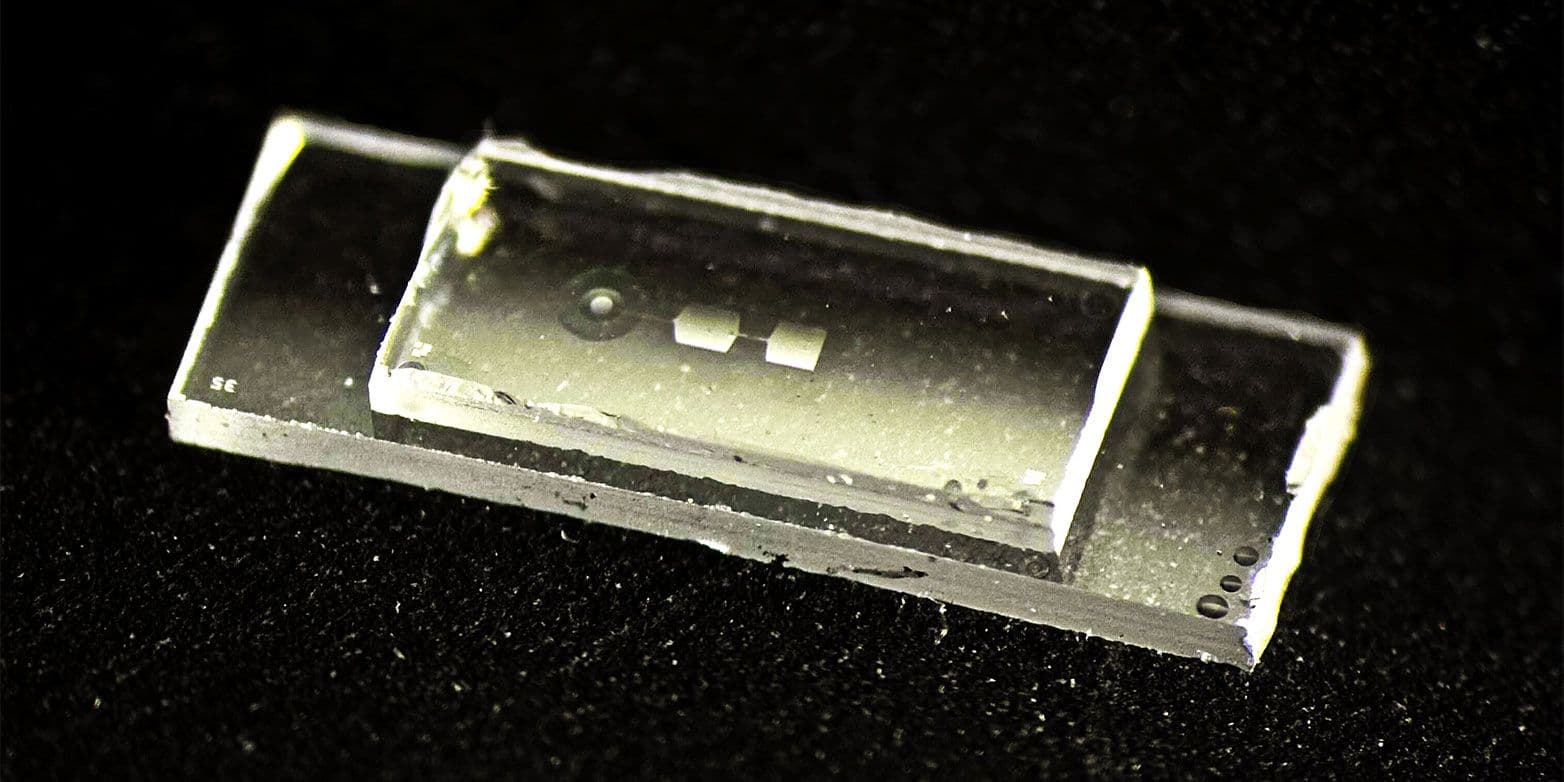
Image: TechRadar
ETH Zurich researchers have built a fingernail-sized quantum chip that stores information in microscopic vibrations rather than relying on the same hardware for both memory and computation. The design splits those jobs in a way that resembles a classical computer: a superconducting transmon qubit acts as the CPU, while a high-overtone bulk acoustic wave resonator (HBAR) provides the quantum equivalent of RAM.
The idea is similar to how a guitar string holds a note through vibration. In this chip, different vibrational modes inside the resonator act as separate memory slots. According to the study from ETH Zurich’s Hybrid Quantum Systems group, the qubit can swap a quantum state out of a vibrational mode, manipulate it, and write it back.
Led by quantum physicist Yiwen Chu, with doctoral students Yu Yang and Igor Kladarić listed as lead authors, the team says the approach could expand one of quantum computing’s most constrained resources: short-term memory. Because acoustic waves have wavelengths about 100,000 times shorter than electromagnetic waves, the architecture can be packed into a very small chip.
Quantum Fourier transform and period finding tests
The team also demonstrated a universal gate set and ran small instances of the quantum Fourier transform and a period-finding algorithm, two common benchmarks used to test quantum systems. TechRadar reports that these experiments served as a proof of feasibility for the chip’s memory-and-processing design.
Recommended reading
Samsung 990 SSD hits 7,250 MB/s with a 2TB option
The longer-term goal is quantum random-access memory (QRAM), which could let quantum computers access much larger stores of quantum memory than current systems allow. Whether that becomes practical will depend on how well the architecture scales and how much computational power researchers can build around it.

Computing Editor
Tomas lives in the terminal. He covers chips, laptops, and operating systems with a focus on performance and efficiency. He reads kernel changelogs the way other people read fiction, and he's always on the hunt for the perfect mechanical keyboard switch. If it processes data, Tomas has an opinion on it.
via TechRadar