• 2 min read
FreeRemoteDesk skips subscriptions and middlemen
FreeRemoteDesk lets you reach a home dev machine from any browser using your own Cloudflare and Vercel accounts, with no monthly fee.
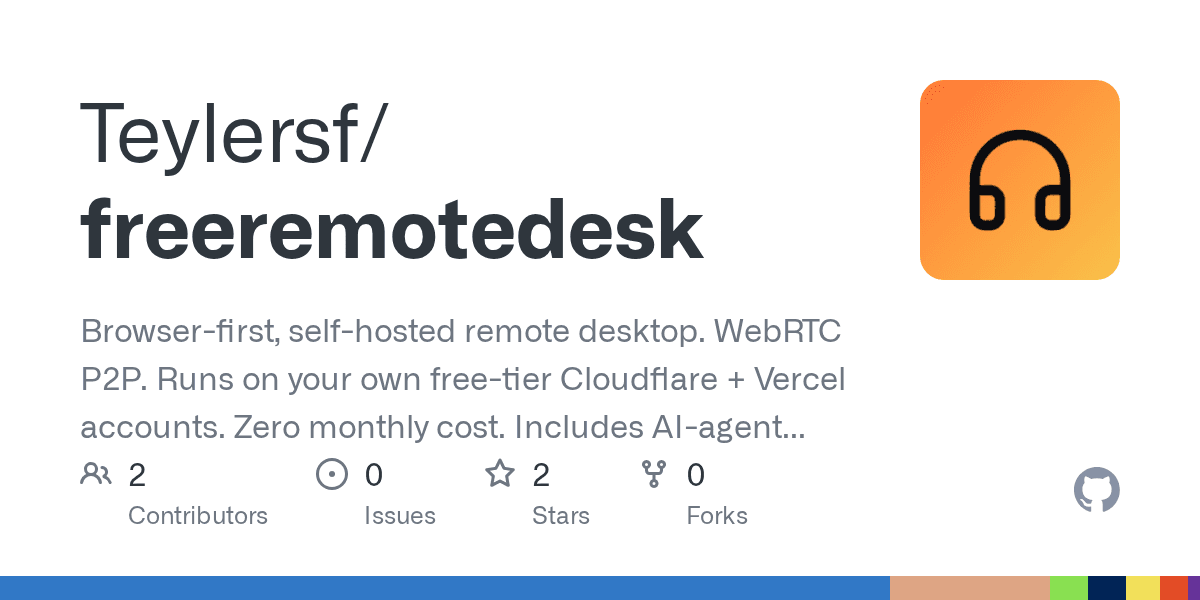
Image: Hacker News
FreeRemoteDesk is an open-source remote desktop project built around a simple pitch: access your home development machine from any browser, with no servers you operate directly, no monthly cost, and infrastructure that stays under your control.
The project offers three setup paths. The first is aimed at people using coding assistants: paste a single prompt into tools such as Claude Code, Cursor, Aider, Codex, or Continue, and the agent is instructed to read the repo’s AGENTS.md file and complete the deployment. According to the project, that flow checks for node, pnpm, and gh, prompts for logins to gh, wrangler, and vercel, deploys the signaling worker to Cloudflare, deploys the PWA to Vercel, downloads the host installer, and returns the two URLs needed for first-run setup.
There is also a manual route with deploy buttons and a release download:

Recommended reading
Samsung 990 SSD hits 7,250 MB/s with a 2TB option
A third option runs scripts/setup.sh on macOS/Linux or scripts/setup.ps1 on Windows. The repo says the script performs the same deployment steps as the assisted setup, minus the guided narration.
How FreeRemoteDesk is built
The host agent uses Tauri v2 with a Rust backend. Its WebView handles WebRTC and getDisplayMedia(), while Rust injects OS input through enigo. On the client side, the viewer is a React + Vite PWA. Signaling runs on Cloudflare Workers with one Durable Object per pairing code.
The project says screen video travels directly between devices over WebRTC, with signaling traffic under 1 KB per session. SDP/ICE data is relayed by the signaling layer, while media is protected with DTLS-SRTP end-to-end encryption and does not pass through the signaling infrastructure. Input events return on a WebRTC DataChannel and are injected on the host machine.
v0.1.0 is already shipped, with the repo describing it as Phase 1 MVP + BYO-infra pivot + Phase 4 packaging complete. CI is green on Windows/macOS/Linux, and installers are available on the releases page. For v0.2.0, the roadmap includes WebAuthn/passkey saved hosts, biometric reconnect, and a session PIN fallback. The project is currently listed under Apache-2.0, marked as pending before v0.2.0.

Computing Editor
Tomas lives in the terminal. He covers chips, laptops, and operating systems with a focus on performance and efficiency. He reads kernel changelogs the way other people read fiction, and he's always on the hunt for the perfect mechanical keyboard switch. If it processes data, Tomas has an opinion on it.
via Hacker News