• 2 min read
GE hybrid plane climbs past 9 km in NASA tests
GE Aerospace flew its hybrid-electric powertrain above 30,000 feet for the first time in NASA testing, a key milestone for commercial-altitude aviation.
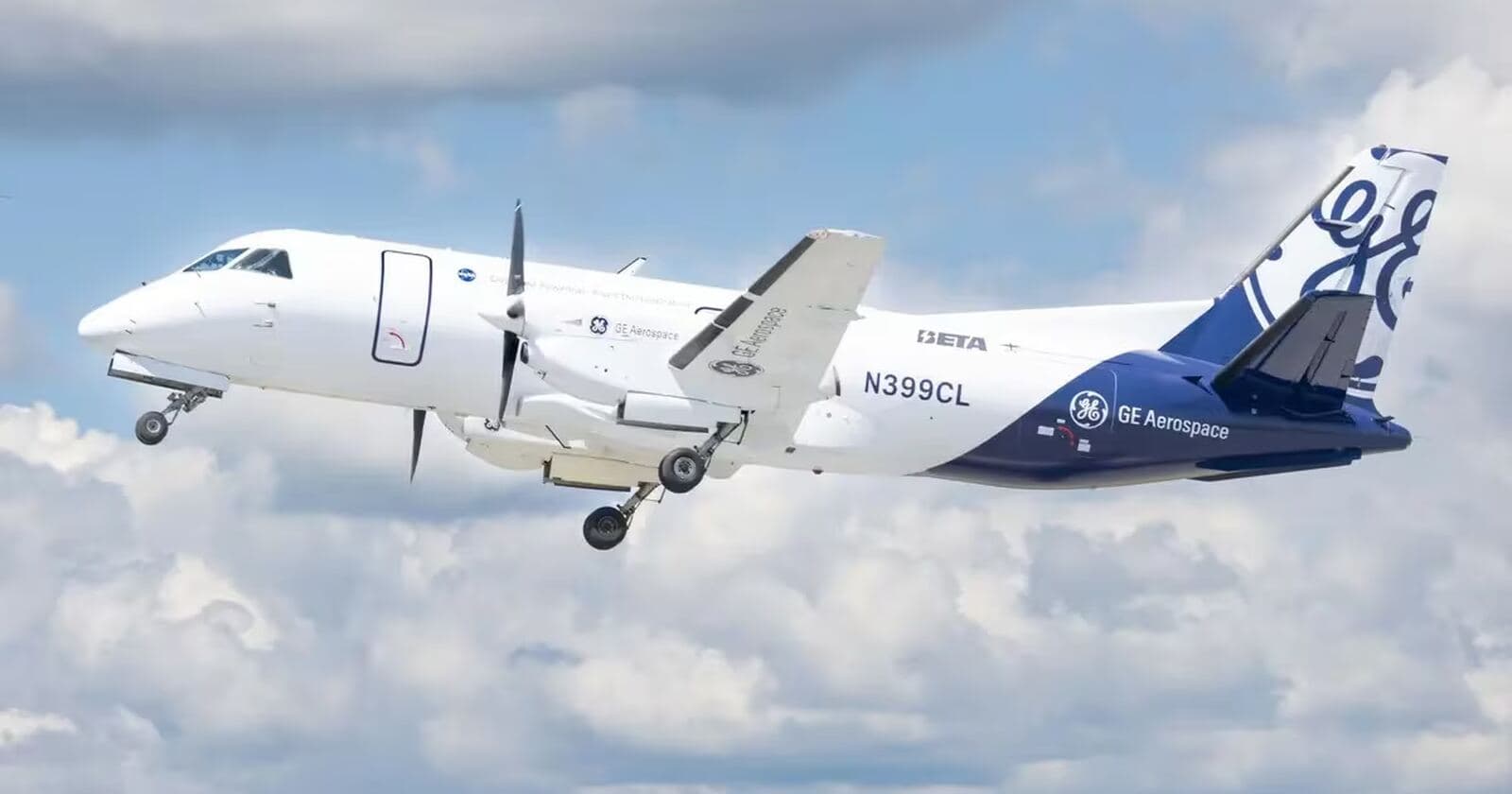
Image: ITzine
GE Aerospace has flown its hybrid-electric powertrain above 30,000 feet—about 9.1 km—for the first time, crossing a threshold that matters because it matches the cruising altitude of conventional passenger aircraft.
The tests were carried out under NASA’s Electrified Powertrain Flight Demonstration program with Boeing and BETA Technologies. A modified Saab 340B served as the flying testbed, and the longest flight with the system lasted more than two hours.
GE Aerospace says the setup splits workload between the gas turbine and electric sides depending on the phase of flight. During testing, the electric portion not only turned the propeller but also operated as a generator to recharge the aircraft’s onboard battery.

Recommended reading
Earth model suggests AI isn’t humanity’s only endgame
That matters because hybrid systems have long been seen as one way to cut fuel burn and ease engine loads while aviation looks for ways to reduce its dependence on kerosene. Getting a megawatt-class system to work at the altitudes used by mainline airliners is far harder than ground tests or short low-altitude demos, given the cold temperatures, thin air, and strict reliability requirements.
The experimental powertrain combines electric motors, converters, inverters, a control system, a gearbox, a propeller, heat exchangers, and GE Aerospace’s CT7 turboprop engine. BAE Systems supplied the batteries, while Aurora Flight Sciences, a Boeing company, developed the special nacelle that houses the equipment.
According to GE, the aircraft also crossed the Atlantic to the UK in hybrid-electric mode. That is another critical test for a program like this: the system has to perform across a full mission, not just in a single favorable operating window.
GE Aerospace links the work to CFM International’s RISE program, which aims to cut fuel consumption in future engines by more than 20% versus current commercial powerplants. The real measure now is not the altitude milestone, but how quickly this architecture can be matured into something viable for a commercial aircraft.

Frontier Editor
Dan is our resident futurist, covering electric mobility, space exploration, and the smart home. He's interested in atoms just as much as bits. Whether it's a new battery chemistry, a reusable rocket, or a protocol that finally makes IoT devices talk to each other, Dan breaks down the engineering that pushes humanity forward.
via ITzine