• 4 min read
Honda’s Prologue joins a growing U.S. EV casualty list
The Honda Prologue is the latest EV to exit the U.S. as tax credits ended, tariffs rose, and automakers cut back across the market.
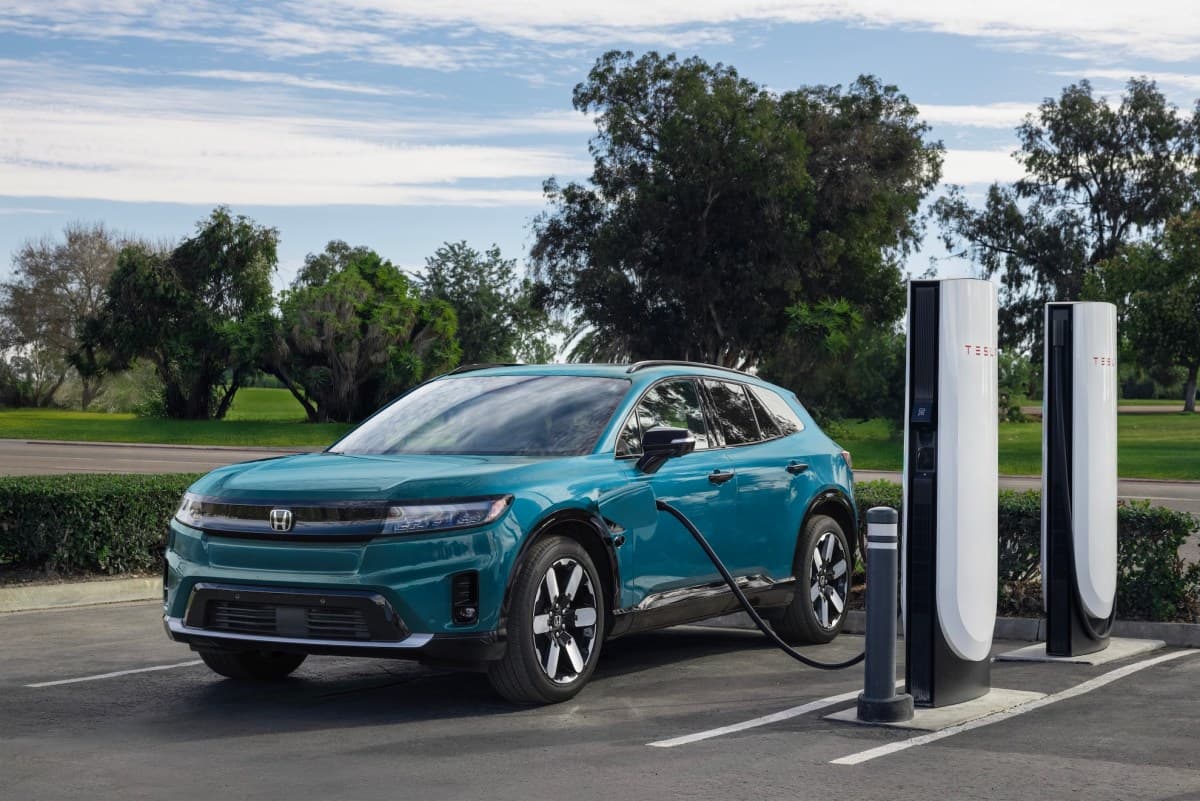
Image: TechCrunch
The Honda Prologue is officially done, a move Honda confirmed to TechCrunch and one that leaves the automaker with no all-electric vehicle in its U.S. lineup. Its exit also underscores a wider pullback in the U.S. EV market, even as EV adoption continues to grow globally.
According to Kelley Blue Book and Cox Automotive, U.S. buyers purchased 247,226 EVs in the second quarter — about 5.8% of the total market. Sales improved from the first quarter of 2026, but remained below the same period last year, after the $7,500 federal tax credit ended in fall 2025. TechCrunch notes that fourth-quarter 2025 sales were 36% lower than the same period in 2024, while the gap narrowed in Q2 2026, when sales were still 20.5% below Q2 2025.
Even with that partial recovery, several EVs have already left — or are leaving — the U.S. market this year.
Afeela never made it to production. The project began as Sony’s Vision S prototype in 2020, before Sony and Honda formed a joint venture in 2022 and revealed an Afeela prototype in 2023. In March 2026, the joint venture abandoned the two planned Afeela-branded EVs, shortly after Honda canceled three EVs intended for the U.S.
Honda also halted development of the Acura RDX, Honda O sedan, and Honda O SUV in March 2026, blaming U.S. tariffs and Chinese competition. The Prologue, built with General Motors at GM’s Ramos Assembly Plant in Mexico and closely related to the Chevrolet Blazer EV, lasted longer. It sold roughly 33,000 units in 2024 and 39,000 in 2025 before sales fell sharply after the tax credit ended.
Recommended reading
Mercedes brings EV-style software to gas and hybrid SUVs
Hyundai also trimmed its lineup. In March, it said it would stop selling the Ioniq 6 in the U.S., a move likely tied to tariffs. The sedan is built in South Korea, while the Ioniq 5 and Ioniq 9 are assembled in Georgia. Hyundai said it will keep importing the pricier, lower-volume Ioniq 6 N.
Nissan decided last year not to build a 2026 model year of the Ariya for the U.S., and it has not returned. Nissan first unveiled the Ariya in 2020 as its first all-electric model since the Leaf.
Polestar, owned by Geely, has effectively been pushed out of the U.S. by the country’s ban on Chinese-connected vehicle technology. The company needed authorization from the U.S. Department of Commerce to keep importing and selling vehicles in the country and did not get it. Polestar said it will continue selling existing U.S. inventory of the Polestar 3 and Polestar 4 and continue supporting customers through its service network. Volvo Cars, also owned by Geely, did receive authorization.
Tesla said in January it would end production of the Model S and Model X. The last vehicles rolled off the line this spring, and Tesla has since removed those assembly lines from its Fremont, California factory to make space for Optimus robot production. TechCrunch notes Tesla sees its future in autonomy, robots, and AI, while Model S and Model X sales had steadily declined as buyers shifted to the cheaper, higher-volume Model 3 and Model Y.
Volkswagen has also pulled back. In April, it said it would stop producing the ID.4 at its factory in Chattanooga, Tennessee, as it shifts toward higher-volume vehicles including its upcoming gas-powered Atlas SUV. The company said U.S. buyers will still be able to purchase the ID.4 until inventory runs out, which it expects to last into 2027.
The ID Buzz is on hiatus rather than gone for good, with no 2026 model but a planned return in 2027. Self-driving versions are already being tested in the U.S.: MOIA America and Uber began testing autonomous microbuses in Los Angeles in April ahead of a robotaxi launch planned for late 2026, initially with human safety operators.
Volvo said in March it would withdraw the EX30 and EX30 Cross Country from the U.S., with production for the market ending after the summer. The EX30 had drawn strong attention ahead of its U.S. launch in 2025 as Volvo’s more affordable EV, while the company plans to keep selling the larger EX60 and EX90 in the United States.

Frontier Editor
Dan is our resident futurist, covering electric mobility, space exploration, and the smart home. He's interested in atoms just as much as bits. Whether it's a new battery chemistry, a reusable rocket, or a protocol that finally makes IoT devices talk to each other, Dan breaks down the engineering that pushes humanity forward.
via TechCrunch