• 2 min read
Linux now boots on Sega 32X, badly but for real
An engineer has booted Linux on Sega’s 1994 32X add-on, despite tiny memory limits and weak SMP performance on its dual SH-2 CPUs.
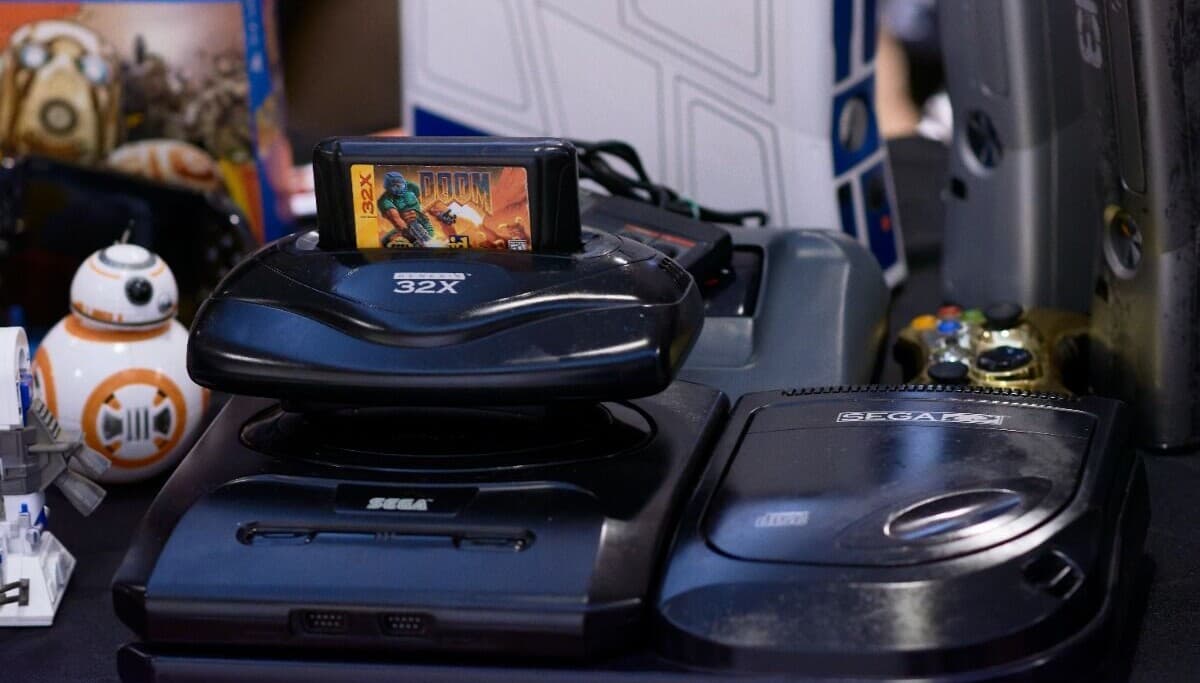
Image: The Register
“Can it run Linux?” has claimed another unlikely target: Sega’s 1994 32X add-on for the Genesis/Mega Drive. Spanish engineer cakehonolulu, fresh off a similar Linux port to the Atari Jaguar, has now brought the OS to one of Sega’s most short-lived pieces of hardware.
The 32X added 256 KB of SDRAM to the Genesis’s 64 KB, plus 256 KB of video RAM and two Hitachi SH-2 CPUs at 23 MHz. The base Genesis relied on a Motorola 68000 at 7.6 MHz. Linux already supports the 68000 architecture, but cakehonolulu said getting Linux to run on the SH-2s — even just to print anything useful over UART — took serious work.
The main obstacle was memory. Cakehonolulu told The Register that the biggest problem was simply how little RAM was available, with framebuffers consuming a large share of it and leaving very little room for Linux kernel features or BusyBox, which acts as the init process after boot.
Recommended reading
SanDisk’s 4TB CFexpress card costs $4,400
Linux eventually started, but the engineer also wanted to see whether symmetric multiprocessing could work on the 32X’s two CPUs despite lacking the usual hardware support for processor synchronization.
“Turns out it was something that could be done; but again, performance is abysmal.”
In the original post, the engineer summed it up more simply: it works, and that was enough. A basic console display driver completed the port, though interaction is limited. Cakehonolulu said they looked for a commercially available Mega Drive/Genesis keyboard but found only early prototypes, and chose not to build a custom adapter using something like a Pi Pico, ATMega, Arduino, or FPGA.
For now, the system is controlled through TTL UART pins. As for what Linux on a 32X can actually do, the answer is not much.
“Honestly, not much, not with the limitations it has at least. We’re lucky we can even add a few more kilobytes worth of data… But it serves as a good example (Linux and Busybox) that you can indirectly let people tinker and bringup a piece of software if it’s well-written … it enables stuff like this to happen.”
Asked what comes next, cakehonolulu had a short answer: “Sega Saturn : )”

Computing Editor
Tomas lives in the terminal. He covers chips, laptops, and operating systems with a focus on performance and efficiency. He reads kernel changelogs the way other people read fiction, and he's always on the hunt for the perfect mechanical keyboard switch. If it processes data, Tomas has an opinion on it.
via The Register