• 3 min read
NASA’s $2.1B Mars craft bets on nuclear power
NASA is preparing the Space Reactor-1 Freedom Mars mission for late 2028, with a projected cost of about $2.1 billion for the spacecraft alone.
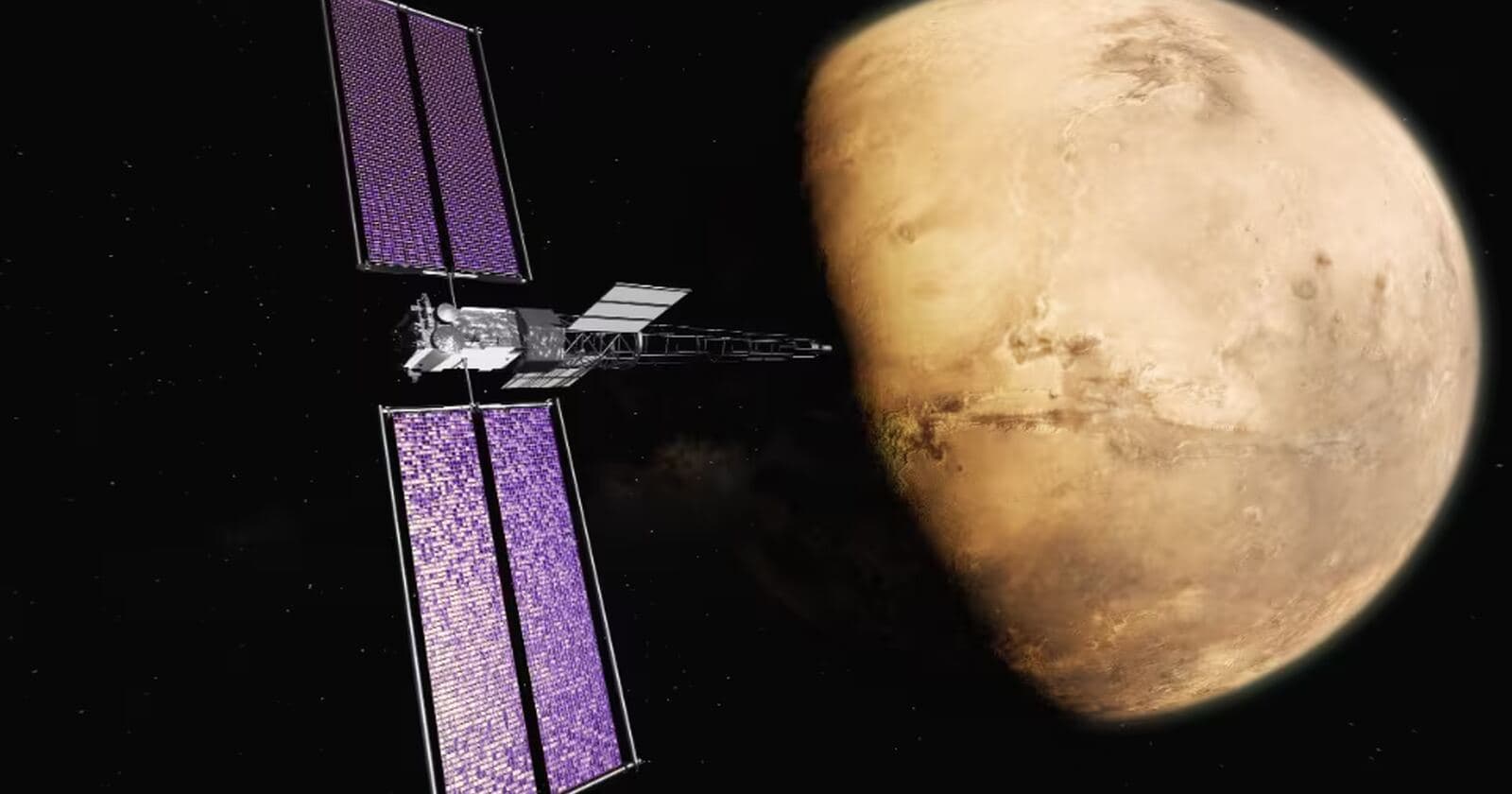
Image: ITzine
NASA is preparing a Mars spacecraft called Space Reactor-1 Freedom (SR-1) that would fly with a nuclear power system, with launch targeted for late 2028, according to Politico. The spacecraft alone is currently estimated at around $2.1 billion — and that figure is not final, with procurement still expected to push costs higher.
NASA describes SR-1 as the first interplanetary spacecraft to use nuclear fission power. In the SkyFall mission, it is meant to deliver three robotic helicopters to Mars for surface exploration, marking a shift toward heavier, more autonomous missions where solar panels are no longer enough.
The logic is straightforward. Mars is far away, dust storms are common, sunlight is limited, and long-duration missions need stable power. That is why nuclear systems for deep space have been under discussion for years in both the US and China, and why NASA keeps returning to the idea in its lunar and Martian programs.
SR-1 mission details and budget
SR-1 is designed not just to reach Mars, but to carry useful payloads using power generated by its nuclear system. NASA has stressed that this is specifically fission, not the radioisotope generators that have long flown in space but produce far less power.
Recommended reading
Self-assembling thin-film electronics come from Japan
The main goal of SkyFall is to deliver three scout helicopters inspired by Ingenuity, the small Mars helicopter that became one of NASA’s most visible recent experiments. The concept is practical: when a rover struggles with terrain, aerial scouting can quickly inspect rocks, elevation changes, and routes better avoided.
Ingenuity itself started as a technology demonstrator rather than a full operational vehicle. It traveled to Mars with Perseverance and then completed 72 flights from 2021 to 2024. NASA ended its operations in January 2024 after damage, but the experience clearly helped shape the next generation of Martian aircraft.
Budget figures cited for SR-1 are:
- $640 million in fiscal 2026
- $890 million in 2027
- $415 million in 2028
- $180 million in 2029
Why NASA is returning to nuclear systems
Nuclear architectures for deep space are not new, but turning them into real interplanetary hardware has been slow and expensive. These systems are heavier, require stricter engineering, and face tougher approvals than solar panels or chemical propulsion.
For NASA, the issue is scale. The farther a spacecraft travels and the more power its payload needs, the fewer workable options remain without a nuclear source. Mars makes that tradeoff especially clear: one helicopter has already shown that aerial scouting works there, but three aircraft with their own mission goals demand a very different power reserve.
There is also the cost issue. The cited $2.1 billion covers only the spacecraft with its nuclear installation and does not include the broader SkyFall mission. If procurement and development run above plan, the total bill could rise significantly — something that often happens in long-running space programs.
By late 2028, the project should offer a clearer answer on two fronts: whether nuclear power can become a practical tool for interplanetary missions, and whether Mars helicopters can evolve from a one-off experiment into a distinct class of exploration hardware.

Frontier Editor
Dan is our resident futurist, covering electric mobility, space exploration, and the smart home. He's interested in atoms just as much as bits. Whether it's a new battery chemistry, a reusable rocket, or a protocol that finally makes IoT devices talk to each other, Dan breaks down the engineering that pushes humanity forward.
via ITzine