• 2 min read
Nubia says its next phone is the first AI agent
Nubia is teasing a new flagship ahead of WAIC 2026, calling it the first smartphone AI agent with on-device multistep actions.
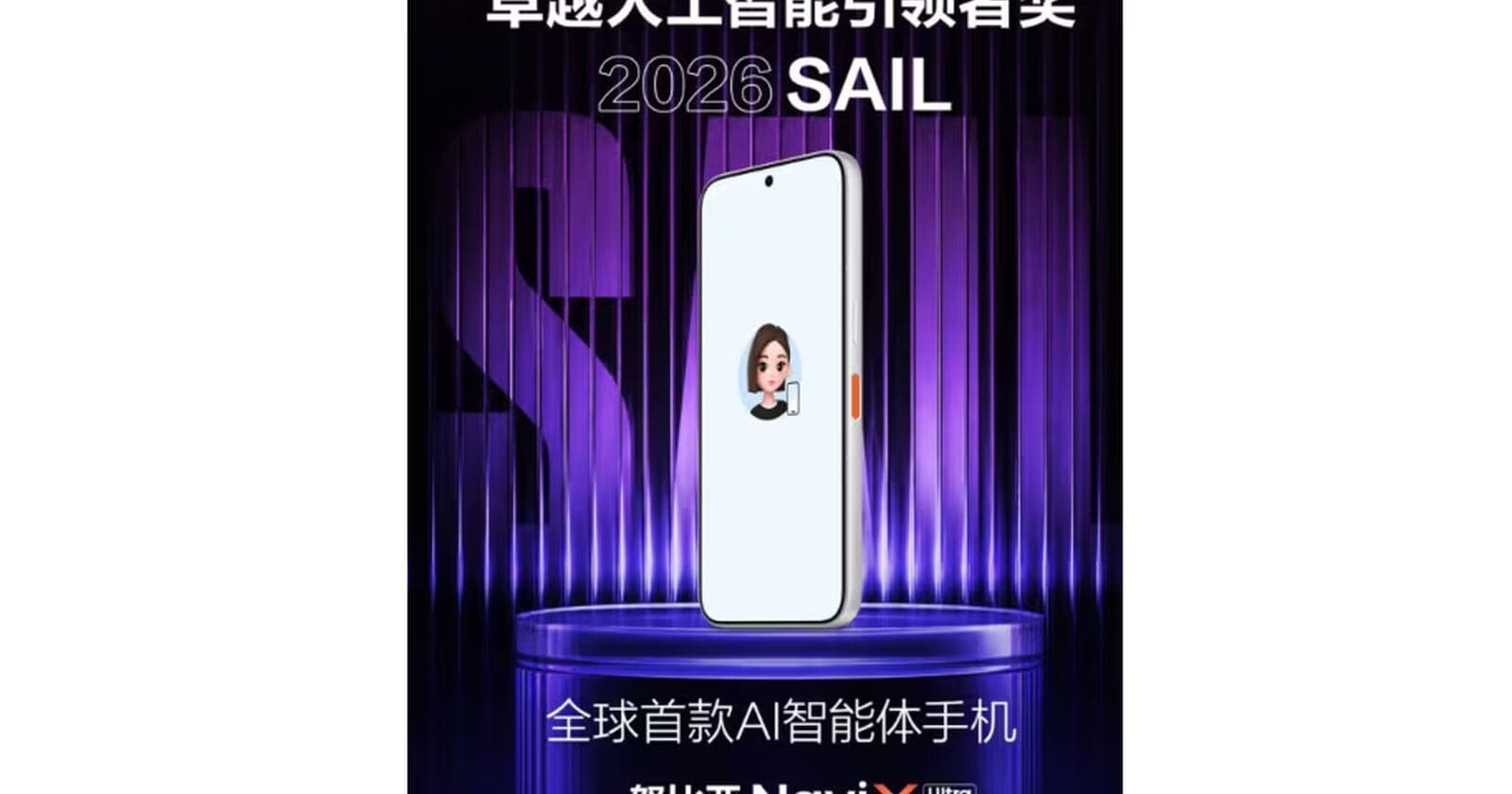
Image: gizmochina
Just hours before WAIC 2026, Nubia began teasing a new flagship with an unusually bold pitch. The ZTE brand says the device will be the “world’s first AI agent among smartphones”, promising not just a bundle of separate AI features but a system that can carry out multistep actions directly on the device. Its debut is set for Shanghai, July 17 to 20.
Based on teasers posted to Weibo, the phone’s design is already fairly clear. It will arrive in at least four colors: black, light pink, silver, and blue. The nubia logo sits in the center of the rear panel, while the camera bar stretches horizontally and houses three modules. Visually, it looks like a regular flagship phone rather than a one-off concept built for a trade-show booth.
The main pitch is software. Nubia president Ni Fei said the company has completed registration of its own large AI agent model, and this smartphone will be the first to get its full integration. Nubia also says the device will work with ByteDance’s Doubao mobile assistant.
According to the brand, the system will understand natural-language requests and launch a chain of actions across multiple apps on its own, rather than only answering questions or generating text. That promise has been circulating in the smartphone market for years, but usually in narrower forms such as call summaries, image generation, or on-screen search.
Samsung is pushing Galaxy AI, Honor is developing its YOYO interface agent, and Google has built Gemini into Android and Pixel devices. Nubia’s angle is different: present an explicitly agentic phone, where AI gets access to system-level actions and handles routine tasks end to end.
Recommended reading
Oppo Reno 16 adds IP69K and a bigger battery
In the context of the Chinese market, the move is not especially surprising. Local models and assistants are advancing faster there than unified global platforms. IDC says shipments of smartphones with generative AI features had already surpassed hundreds of millions of units in 2025. By 2026, the competition is shifting from simply claiming the AI phone label to defining what comes next.

Gadgets Editor
Eli is obsessed with the tangible future. He reviews phones, wearables, and everything with a battery. Known for his rigorous testing protocols and unabashed teardowns, Eli has broken more review units than he cares to admit, all in the name of discovering the truth about durability and repairability.
via ITzine