• 3 min read
Nvidia’s Japan push centers on factories and robots
Jensen Huang left Tokyo with deals across Japan’s tech stack, from a sovereign AI factory to robotics and automotive partnerships.
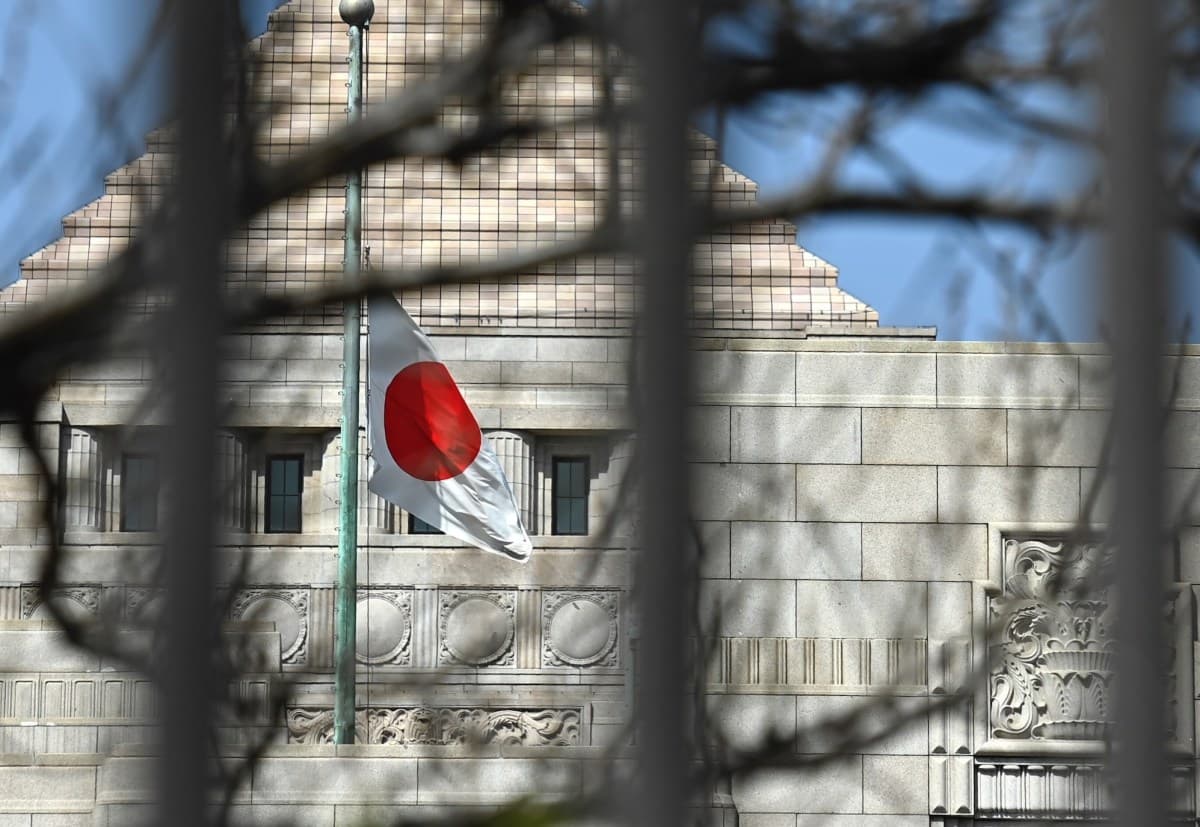
Image: TechCrunch
Nvidia used Jensen Huang’s July 15 and 16 visit to Tokyo to lock in a broad push into Japan’s industrial base, with agreements spanning sovereign AI infrastructure, robotics, chip materials, and automotive systems. The core pitch was straightforward: the next phase of AI will be built for factory floors, robots, and machines, and Nvidia wants Japan at the center of it.
Japan is backing that idea with real money. The government has assembled roughly 44 domestic firms — including SoftBank, Sony, NEC, and Honda — around Noetra, a national effort to build homegrown AI for robots, vehicles, and manufacturing. Tokyo is committing up to 1 trillion yen ($6.2 billion) over five years to develop domestic physical AI models, even as the compute layer still depends on Nvidia.
Noetra and the Vera Rubin AI factory
Nvidia plans to build what it calls “a Vera Rubin AI factory” for the project, a data center expected to launch in 2028 with 13,750 Vera CPUs, 27,500 Rubin GPUs, and 140 megawatts of capacity. Noetra will oversee the effort and plans to build the facility.
Its roadmap has three stages:
- a reasoning model with strong Japanese-language capabilities in fiscal 2026
- an omni-modal model handling text, images, video, and audio by 2028
- “Real-world Native AI” for robots by 2030, released in phases to outside Noetra developers
The sovereignty angle is central. As the U.S. and China pull ahead in large-scale AI, Tokyo wants its own data, its own compute, and less reliance on infrastructure beyond its control. Huang appeared on July 16 with trade minister Ryosei Akazawa at the government’s physical-AI launch, while Prime Minister Sanae Takaichi joined by video.

Recommended reading
Z.AI powers 1GW AI hub without Nvidia chips
Robotics and Toyota sign on
Nvidia also lined up much of Japan’s robotics sector behind Cosmos, its open-model initiative launched in May. Fanuc, Yaskawa, Kawasaki Heavy, Fujitsu, Hitachi, NEC, Sony, SoftBank, Kubota, and robotics group AIRoA said they plan to build on it. In Tokyo, Nvidia introduced Cosmos 3 Edge, designed to run on Jetson Thor chips inside machines.
Some companies are already testing a shared control system, while Honda R&D and Omron are building on the tools now.
“The next frontier of AI is in the physical world, and this is a once-in-a-generation opportunity for Japan.” “Japan invented modern manufacturing. Now, it has the opportunity to reinvent it for the age of intelligent industries.”
Toyota is extending its Nvidia relationship beyond cars. After committing next-generation vehicles to Nvidia’s Drive platform at CES in January 2025, Toyota is now also using Nvidia technology in factory simulations, vehicle software, and traffic-reading systems. Its vehicles will run advanced driver assistance systems that can steer and brake but still require a human driver.
The scale of Japan’s ambition is large: 10 million AI-equipped robots across 18 sectors by 2040, supported by $65 billion in public and private physical-AI investment. Under Japan’s AI Robotics Strategy, released in March, Tokyo wants more than 30% of the global AI robotics market by 2040, a market it values at roughly ¥20 trillion, or about $133 billion. For now, though, Japan’s bid for AI independence still runs on American chips.

Enterprise Editor
Marcus follows the money. He covers enterprise software, cloud architecture, and the tectonic shifts in Big Tech strategy. He translates dense earnings calls and complex M&A activity into actionable insights about where the industry is actually heading. If a tech giant makes a silent pivot, Marcus is usually the first to notice.
via TechCrunch