• 2 min read
Russian scientists fix PEEK warping in 3D printing
Researchers at Kabardino-Balkarian State University modified PEEK so it shrinks less and holds shape after 3D printing.
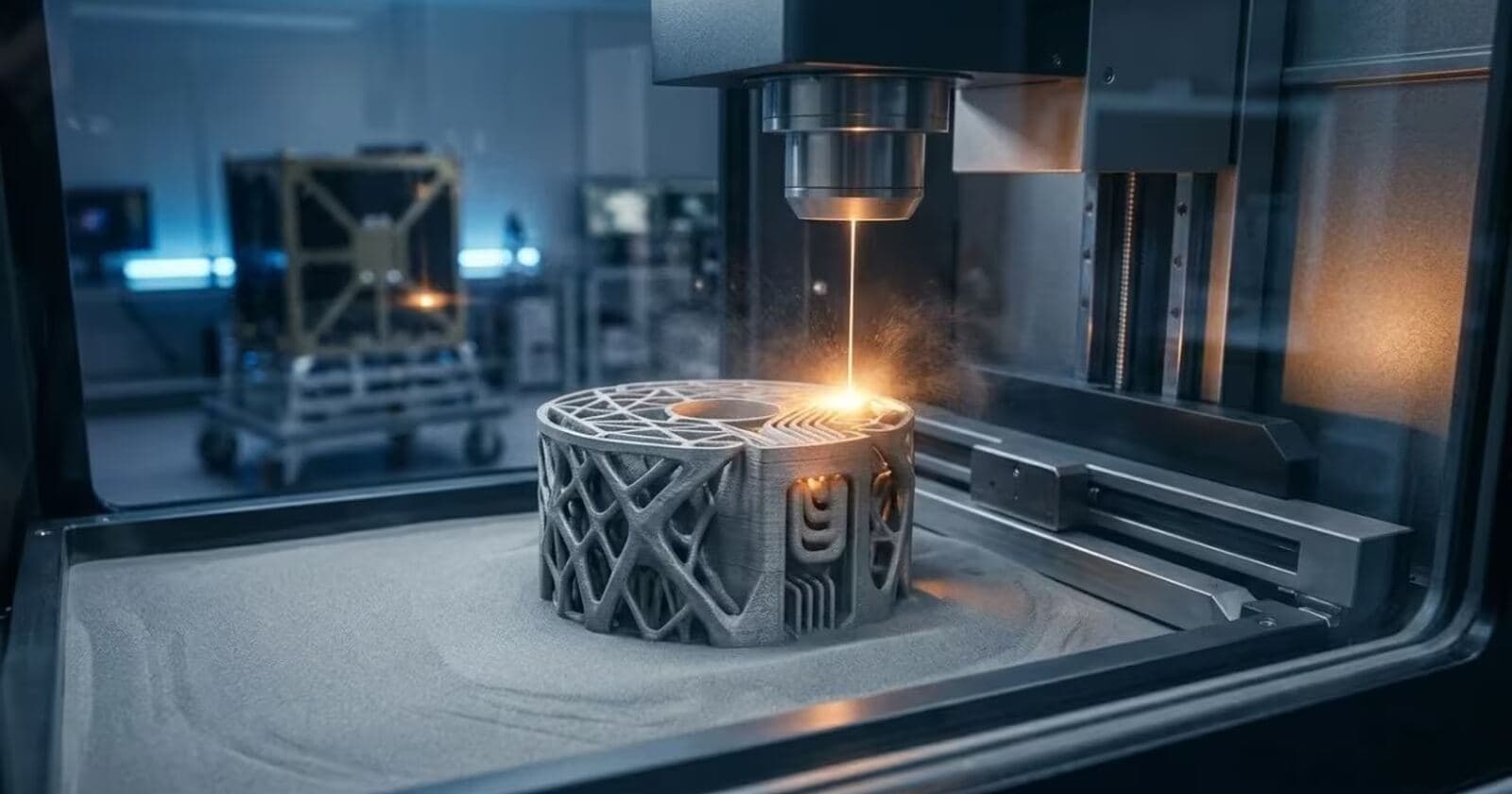
Image: ITzine
Researchers at Kabardino-Balkarian State University say they have modified PEEK so it works better in 3D printing for satellite parts, medical implants, and complex mechanical engineering components. The key change: after printing, the plastic now shrinks less during cooling and is far less prone to warping.
PEEK has long been used where standard plastics cannot handle the load. It already appears in medical instruments, dental and cranial implants, electrical insulation, and parts for aviation and space systems. But in additive manufacturing it has a persistent drawback: the material crystallizes too quickly, printed layers bond less effectively, and the finished part can lose its shape.
The Russian team says its modification changes how the polymer behaves as it cools. A chemical additive was introduced into the molecular chain of PEEK, slowing the formation of the crystalline lattice. That keeps the material mobile for longer after each layer is deposited, giving it more time to bond with the previous layer and cool without sharp internal stresses.
For the space sector, the issue is less the formula itself than whether a part can reliably keep its geometry. Satellite assemblies and onboard equipment must survive temperature swings, vibration, and long operating periods without deforming. If a plastic behaves unpredictably during printing, it is unlikely to make it into production, even if its mechanical properties look strong on paper.

Recommended reading
Russian nanosat update boosts links to 100 Mbps
In medicine, the demands are stricter still. An implant or tool has to match its intended shape precisely, and the material’s surface and structure cannot change after fabrication. That is why manufacturers are looking for polymers that are both suitable for use in the human body and stable enough for industrial printing.
Laboratory tests have already shown that samples of the new material retain their shape after printing. The university now plans to scale the project toward industrial use, aiming to move the modified polymer beyond the lab and into production of aerospace and medical components, where the cost of error is especially high.

Frontier Editor
Dan is our resident futurist, covering electric mobility, space exploration, and the smart home. He's interested in atoms just as much as bits. Whether it's a new battery chemistry, a reusable rocket, or a protocol that finally makes IoT devices talk to each other, Dan breaks down the engineering that pushes humanity forward.
via ITzine