• 3 min read
630 miles on sunlight: teens race solar cars across Texas
High school teams will drive homemade solar cars 630 miles across Texas starting July 19th in the 30th Solar Car Challenge.
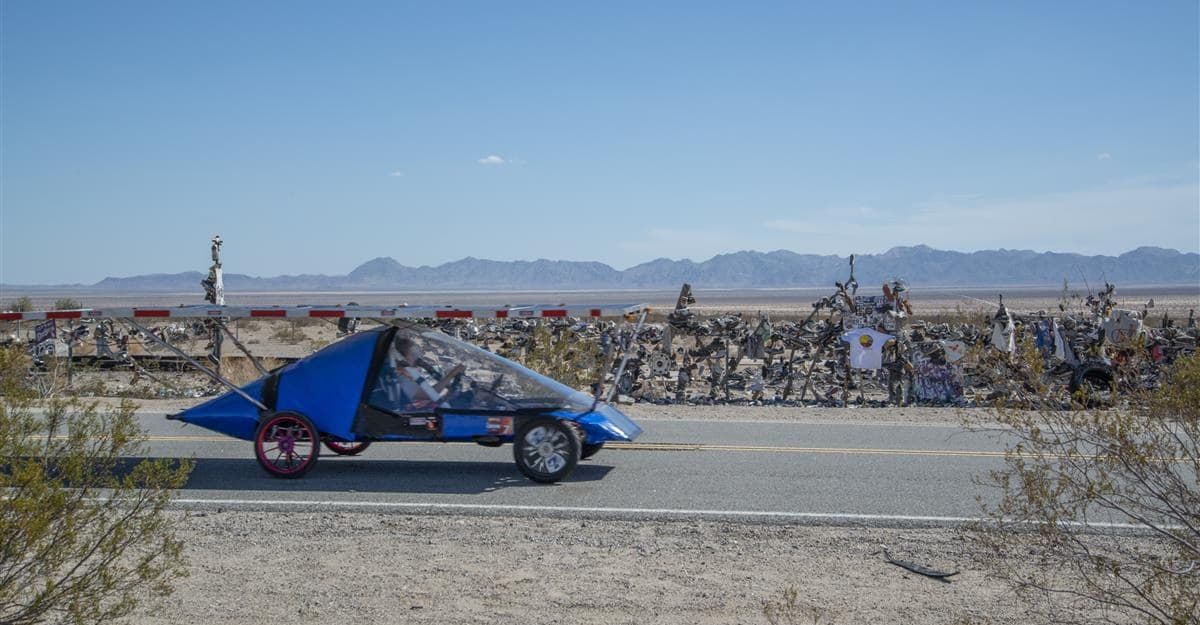
Image: The Verge
On July 19th, dozens of high school teams will set off on a five-day, 630-mile race from Fort Worth to Fort Stockton, Texas. The twist: the cars are designed and built by students, and the only fuel allowed is sunlight.
The Solar Car Challenge is marking its 30th anniversary this year. Founded in 1993 by Dr. Lehman Marks, the program was created to get students out of textbook-only learning and into hands-on engineering. The first national competition followed in 1995.
“We went up there and the kids were just mesmerized by the intricacy of the solar project.”
Marks said the idea took shape after a visit to a collegiate solar car project at the University of North Texas, when his students asked him to let them build one too. He quickly realized high schoolers could not fairly compete with university teams, so he built a separate competition around them instead.
Recommended reading
Google Maps' 3D Android Auto view fixes tricky turns
Since its launch, the challenge has involved more than 85,000 students across 39 states and in Canada, Mexico, Costa Rica, Spain, and Singapore. There are now more than 260 active high school solar projects. This year’s route runs through Palestine, Round Rock, Fredericksburg, and San Angelo before the finish in Fort Stockton.
What changed in this year’s race
The competition typically includes classic, advanced, and electric-solar power classes. This year adds a new cruiser division, where teams must build four-seater vehicles with solar arrays integrated into the body.
That change is meant to push teams toward vehicles that look more like real passenger cars rather than the flat, ultra-aerodynamic machines usually associated with solar racing.
“People would say, 'Oh, this is really neat, but it’s not reality.' Now we can show them what it could be.”
Marks said he wants students thinking about four doors, a trunk, and room for four passengers — a more practical vision of solar-assisted transportation.
How students build the cars
For teams, the race is as much about engineering process as it is about endurance. Students use off-the-shelf parts and 3D printed materials, and they are expected to test thoroughly before arriving. Marks said he has been urging teams to log 500 miles before the event so failures happen in the school parking lot, not on the road.
One entrant, Blake Wood, a 17-year-old rising senior from Benbrook Middle-High School, is a captain of the Old Rip Racing team. The 14-member group includes students from three different schools. Wood said the team began planning about a year in advance, starting with paper sketches, studying successful Classic Division cars, and then moving into CAD as their design skills improved.
“We’re making progress.”
Wood said solar vehicles still have long-term potential, even if commercial solar cars remain rare and several startups have failed or pivoted. Marks pointed to Aptera as one company still chasing that goal, but said the competition’s real mission is elsewhere: training students in teamwork, engineering, battery technology, commitment, and problem-solving. As he put it, he is not trying to build a better solar car as much as he is trying to build engineers.

Frontier Editor
Dan is our resident futurist, covering electric mobility, space exploration, and the smart home. He's interested in atoms just as much as bits. Whether it's a new battery chemistry, a reusable rocket, or a protocol that finally makes IoT devices talk to each other, Dan breaks down the engineering that pushes humanity forward.
via The Verge