• 2 min read
Solar storm risk may be twice as high as thought
NASA-backed research suggests the strongest solar storms may not hit a natural ceiling, potentially doubling risk estimates for satellites and power grids.
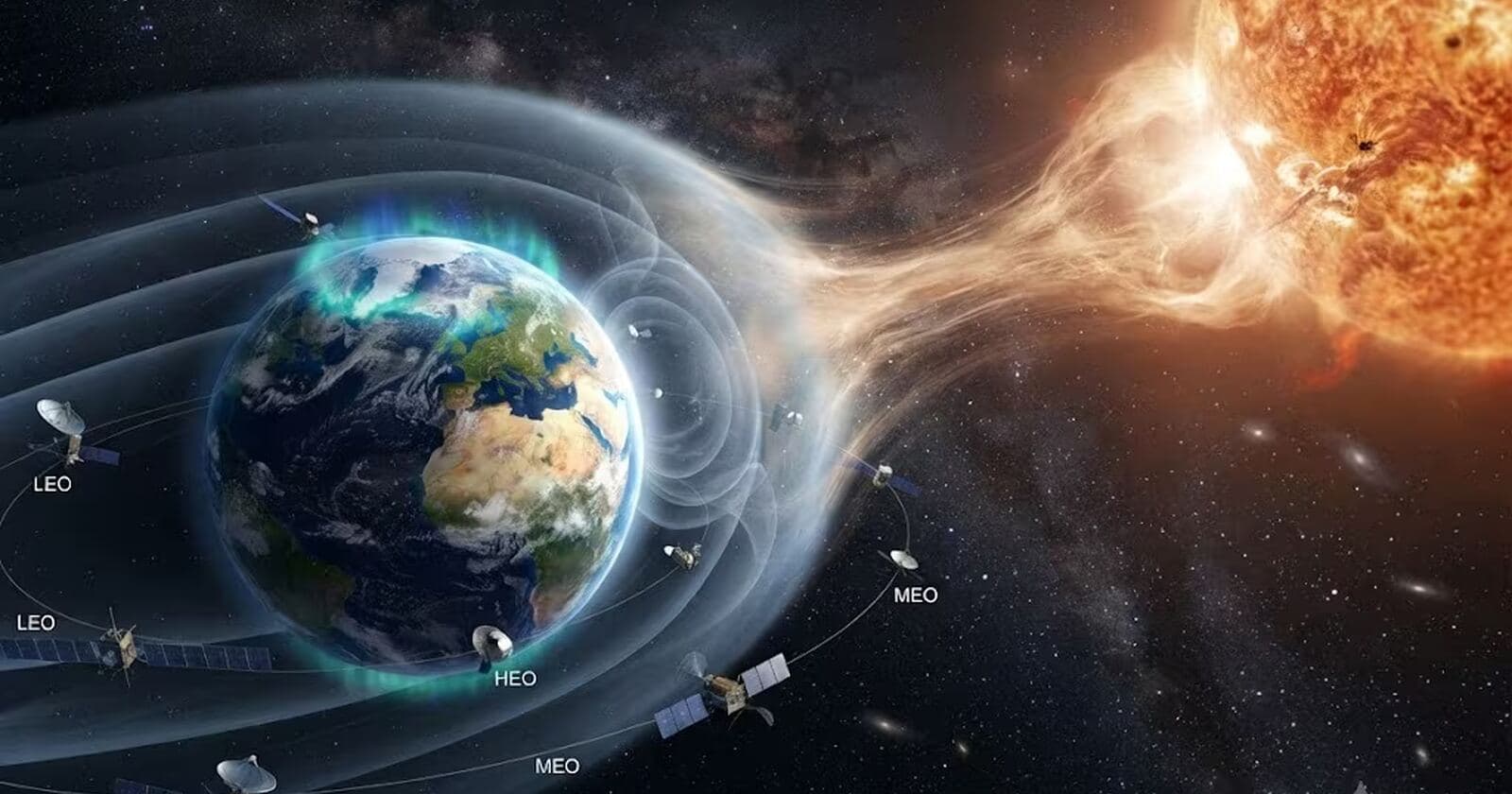
Image: ITzine
The most extreme solar storms may be far more dangerous than long-standing models suggested. According to work highlighted by NASA and published in Nature, the assumed upper limit on the strength of geomagnetic storms may be an artifact of bad data rather than a real physical cap. If that holds up, the risk to satellites, communications, and power systems during rare major events may have been underestimated by roughly twofold.
For years, researchers thought Earth’s magnetosphere stopped responding proportionally once the solar wind reached a certain intensity. That produced a plateau in the charts: stronger solar wind, but little added geomagnetic impact. The new study argues that the flattening may have come from measurement problems instead.
Most solar-wind data comes from spacecraft at the L1 Lagrange point, about 1.5 million kilometers from Earth. By the time that plasma reaches the magnetosphere, it can change. Researchers say the data is also affected by uncertainty in the exact arrival time of the flow and by instrument error. At extreme values, those shifts become more pronounced, making a false plateau easier to produce.
The team links the problem to regression to the mean. In practice, the strongest readings are more likely to end up a bit above or below the true value because of noise and random error. When those measurements are combined into a single relationship, it can look as if the magnetosphere responds less as solar wind intensifies, even if the underlying curve keeps rising.
To test that idea, the researchers built a new statistical model that accounts for changing measurement accuracy under different levels of solar activity. They then compared the results with observations from NASA’s THEMIS and MMS satellites, which operate closer to Earth than L1. After recalculation, the link between solar-wind strength and geomagnetic response no longer looked flattened and stayed linear even at maximum values.
Recommended reading
US Clears First Mirror Satellite to Beam Sunlight at Night
The team found a similar result for indices used to estimate the strength of electrical currents in the upper atmosphere above the polar regions. Those indices matter well beyond theory: they are used to estimate how a solar storm will affect both orbiting systems and infrastructure on Earth.
According to NOAA, strong geomagnetic events can disable satellites, disrupt radio communications, and induce currents in power lines. If other groups confirm NASA’s conclusion, space weather models may need a significant overhaul just as the satellite communications market expands, with the number of spacecraft in orbit already in the thousands and set to grow further by 2030.

Frontier Editor
Dan is our resident futurist, covering electric mobility, space exploration, and the smart home. He's interested in atoms just as much as bits. Whether it's a new battery chemistry, a reusable rocket, or a protocol that finally makes IoT devices talk to each other, Dan breaks down the engineering that pushes humanity forward.
via ITzine