• 2 min read
Fujifilm X100VI wins over Lumix L10 in side-by-side test
After 10 hours comparing Panasonic’s Lumix L10 and Fujifilm’s X100VI, TechRadar’s Tim Coleman says the more emotional choice beat the more practical one.
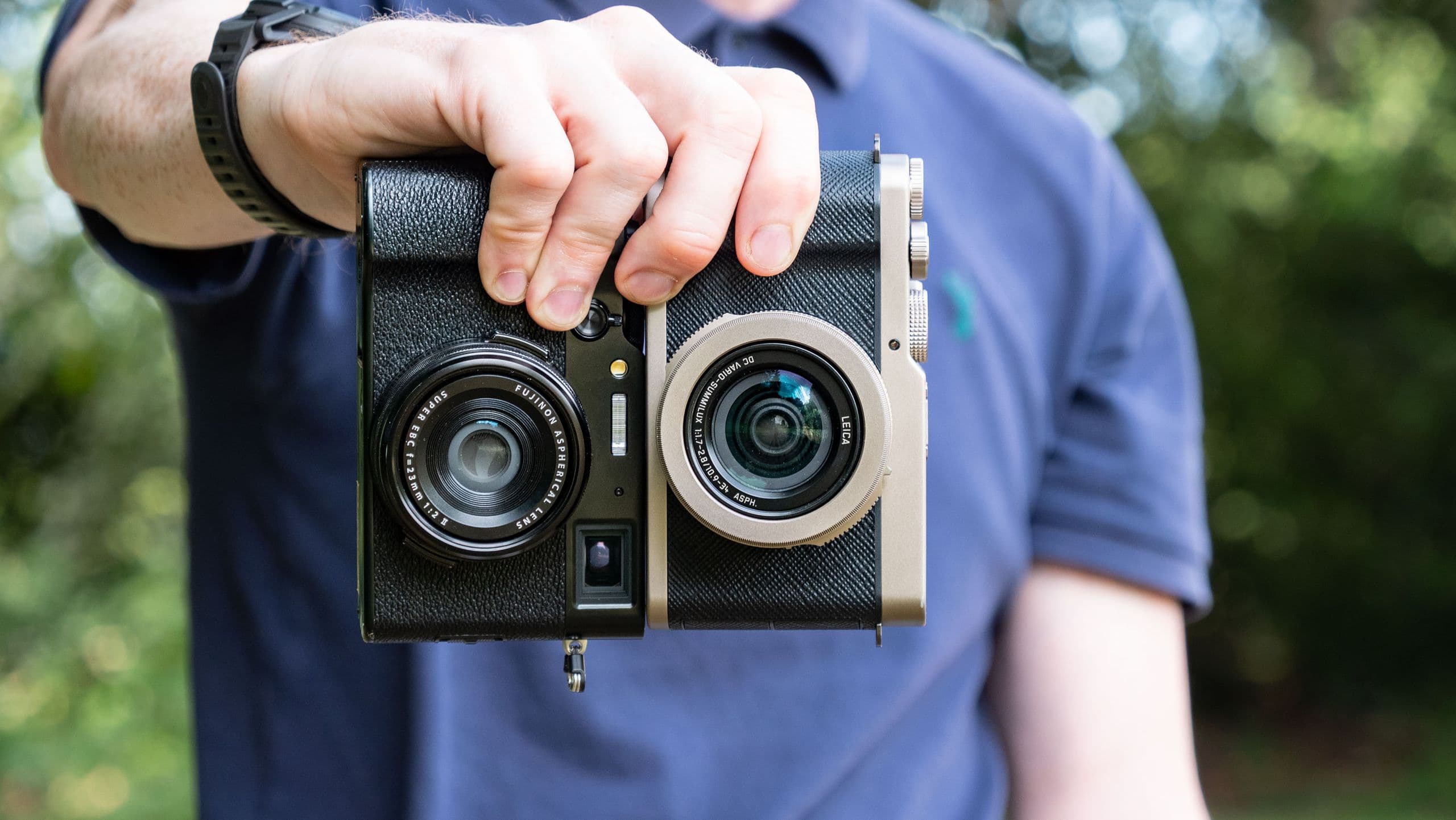
Image: TechRadar
Panasonic’s Lumix L10 and Fujifilm’s X100VI may share a retro, premium-compact look, but TechRadar’s Tim Coleman found they take very different approaches after using them side by side for 10 hours across travel, commuting, and weekend shooting.
On paper, each has a clear case. The Lumix L10 uses a 20MP Micro Four Thirds sensor and a 24-75mm f/1.7-2.8 zoom lens, while the X100VI pairs a 40MP APS-C sensor with a fixed 35mm f/2 lens. Coleman says the Fujifilm’s strengths include its lens quality, higher resolution, in-body image stabilization, faster startup, more advanced viewfinder, and stronger retro styling. The Panasonic counters with a more versatile 3.1x optical zoom, better battery life, Real Time LUTs profiles, faster burst shooting, snappier autofocus, a vari-angle screen, stronger video performance, and a lower price in some regions.
Coleman says the Lumix L10 is the more practical camera overall, especially because of the telephoto reach at the long end of its zoom. But once he stopped focusing on specs and paid attention to the experience of shooting, his preference shifted.
Recommended reading
Samsung 990 SSD hits 7,250 MB/s with a 2TB option
How the cameras felt to use
According to Coleman, the X100VI was simply the camera he wanted to pick up first. He preferred its manual exposure dials, hybrid viewfinder, more compact prime lens, faster startup, and what he described as a more premium feel in the hand, from its weight to its shutter button.
He also says the Fujifilm delivered the more satisfying photographic experience, even if it demanded more effort to master. The Lumix L10 still impressed him, particularly with its lens handling and autofocus, but the Fujifilm was the model that “captured my heart all over again,” as he put it.
On image quality, Coleman argues the comparison is less straightforward than sensor size alone suggests. He notes that despite its smaller sensor, the Lumix L10 has larger pixels and stronger light-gathering potential, so he warns against assuming the X100VI is automatically better in low light. He also found Panasonic’s autofocus more reliable overall, which can matter more than raw specs in getting sharp shots.
Still, when matching the Fujifilm’s 35mm f/2 view as closely as possible with the Lumix at 35mm f/2.3, Coleman preferred the X100VI’s depth-of-field control, especially for street portraits. He also liked the extra flexibility from 40MP files and found the Fujifilm less prone to lens flare. The Panasonic, he says, fights back with zoom versatility and strong portrait results at 75mm f/2.8, where its compression effect can be especially appealing.
The final verdict is split between logic and emotion: Coleman’s head says Panasonic Lumix L10, but his heart says Fujifilm X100VI.

Computing Editor
Tomas lives in the terminal. He covers chips, laptops, and operating systems with a focus on performance and efficiency. He reads kernel changelogs the way other people read fiction, and he's always on the hunt for the perfect mechanical keyboard switch. If it processes data, Tomas has an opinion on it.
via TechRadar