• 4 min read
Starship aborts as India’s Vikram-1 nears liftoff
SpaceX scrubbed Starship at ignition, while Skyroot sets July 18 for Vikram-1's first orbital launch attempt from India.
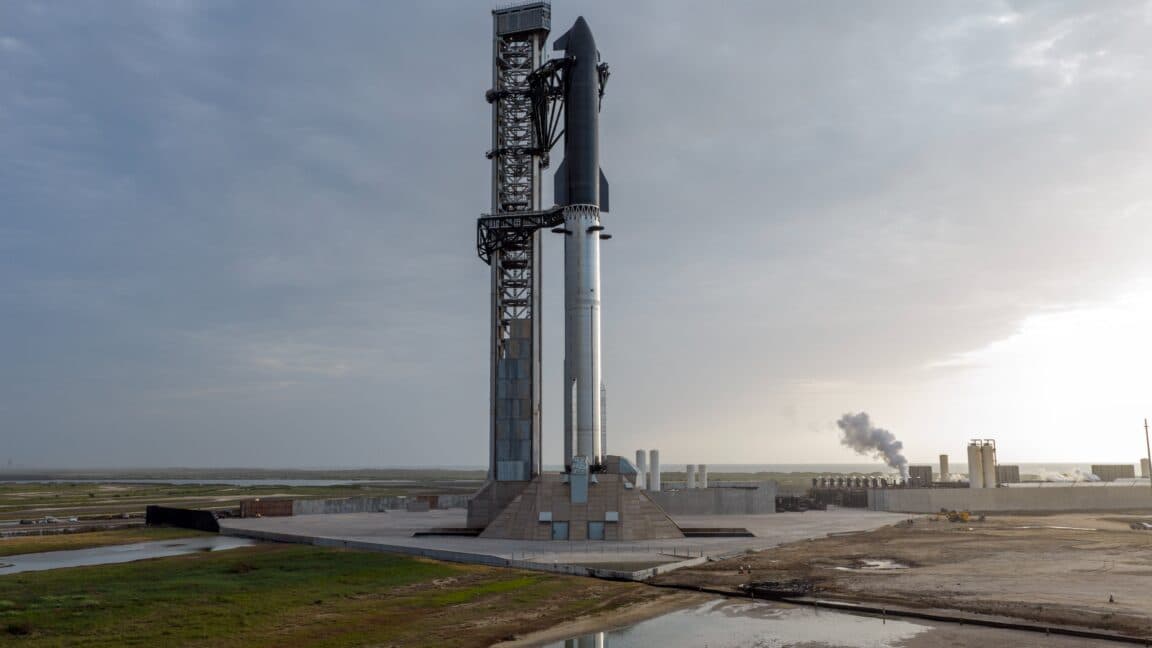
Image: Ars Technica
SpaceX got all the way to T-0 on Thursday in South Texas before a handful of Raptor engines failed to ignite, forcing an automatic scrub of the latest Starship test flight. Founder Elon Musk said the next attempt would “hopefully” come in a few days, though it remains unclear whether work can be done at the pad or if the vehicle must be de-stacked first.
India, meanwhile, is closing in on a milestone. Skyroot Aerospace says the debut launch attempt of its Vikram-1 rocket is set for July 18 at 11:30 am local time. If successful, it would mark the first time a commercially developed Indian rocket reaches orbit.
Designed to carry small satellites weighing up to 350 kg to low-Earth orbit, Vikram-1 is targeting a 450 km orbit at a 60-degree inclination. The flight will carry technology demonstration payloads from Grahaa Space, Cosmoserve, DCubed, and Skyroot’s own SCOPE, plus Cosmos Diamonds' artwork “Cosmic Bloom” and a micro-art piece.
Recommended reading
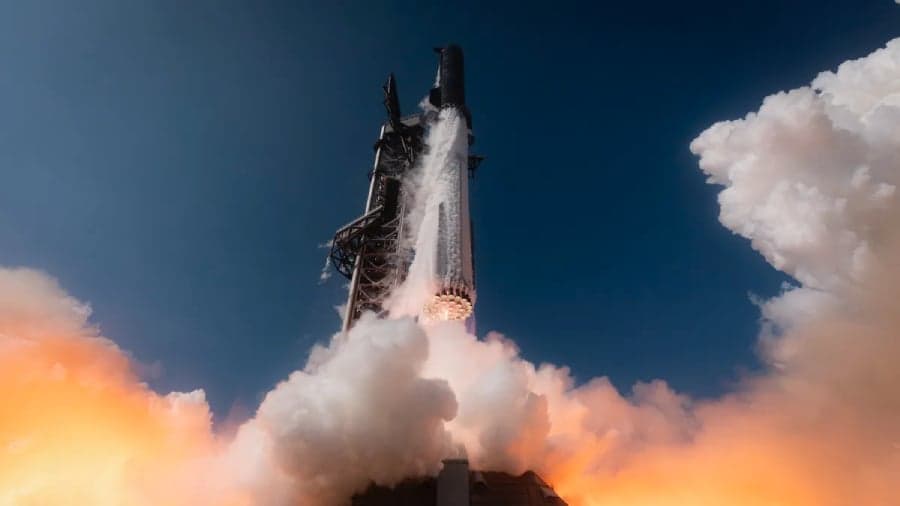
Starship V3 abort hits SpaceX stock and Starlink plans
“We have done everything that could be done to test Vikram-1 on ground. We are eager to see how Vikram-1 performs in real flight environment for the first time. This is our first test flight, and we will be getting valuable data from it.”
Japan also logged a small but notable reusability test. JAXA said its RV-X experimental reusable rocket lifted off, reached about 11 meters, translated 16 meters horizontally, and landed as planned. The flight lasted about 40 seconds. The agency will use the data for CALLISTO, its joint reusable rocket project with French and German research institutions.
Australia added infrastructure rather than a rocket. Newly formed Spinifex Space plans to provide suborbital launch campaigns, private range access, and test infrastructure from southwestern Queensland, including support for static-fire testing, hypersonic vehicles, kinetic effectors, energetics handling, and destructive testing.
China, meanwhile, says it recovered a reusable orbital-class booster for the first time. A Long March 10B launched from the Wenchang Commercial Space Launch Site on Hainan Island, then roughly 10 minutes later descended and guided itself into a four-legged frame mounted on an offshore vessel. Cables stretched over the ship caught the booster as its landing engines shut down, while the upper stage continued to orbit with a payload identified only as CX-26.
Another company is now looking harder at launch supply. AST SpaceMobile said it plans to offer $1 billion in convertible notes, citing a need to secure more access to orbit for its BlueBird satellites. The company said the funds could support partnerships or acquisitions to vertically integrate and reduce dependence on third-party launch providers, after the failed New Glenn static-fire test in April disrupted its launch plans.
Japan’s government is aiming for 30 launches per year by the early 2030s, despite completing only two orbital launches in 2026 so far. One was an H3 return-to-flight mission on June 11; the other was the third flight of Space One’s Kairos on March 4, which failed.
Europe also cleared a new rideshare path. The European Space Agency awarded a contract to launch its Henon solar storm-monitoring CubeSat on Ariane 6 in early 2027, alongside the PLATO exoplanet telescope. ESA says the launch architecture can accommodate up to four 16U CubeSats.
Starship payload test and launch economics
For the scrubbed Starship mission, SpaceX had loaded 20 Starlink V3 satellites into the ship’s deployer. These are not intended for the operational network, but engineers plan to test laser links with other low-Earth orbit spacecraft to validate interoperability with earlier Starlink generations.
Ars Technica also examined what it would take to deploy SpaceX’s proposed 1 million satellite megaconstellation for orbital data centers. In the most optimistic scenario, the company would need 17,500 Starship launches over five years. In the most pessimistic case, that rises to 77,000 launches — or 42 Starship launches a day. Estimated total costs range from $1.45 trillion to $9.8 trillion.
Falcon Heavy gets NASA’s SunRISE mission
NASA said its SunRISE mission will now launch on a SpaceX Falcon Heavy from Kennedy Space Center in Florida, shifting from the previously planned United Launch Alliance Vulcan. The agency did not provide a launch date.
The heliophysics mission includes six SmallSats, each about the size of a toaster oven, operating together as a single radio dish slightly above geosynchronous orbit — about 22,000 miles or 35,000 kilometers up — to track radio bursts from the Sun’s corona.
The next three launches listed by Ars are:
- July 16: Starship | Flight Test 13 | Starbase, Texas | 22:45 UTC
- July 18: Vikram 1 | Aagaman test flight | Satish Dhawan Space Center, India | 06:00 UTC
- July 20: Falcon 9 | Starlink 17-39 | Vandenberg Space Force Base, Calif. | 14:00 UTC

Frontier Editor
Dan is our resident futurist, covering electric mobility, space exploration, and the smart home. He's interested in atoms just as much as bits. Whether it's a new battery chemistry, a reusable rocket, or a protocol that finally makes IoT devices talk to each other, Dan breaks down the engineering that pushes humanity forward.
via Ars Technica